
3PL Distribution Centre UK & Ireland | CBF Fulfilment
The search for a 3PL distribution centre in the UK often starts with a simple question about storage space and pick-and-pack fees. It rarely stays that simple. Within weeks, the conversation turns to customs clearance, commodity codes, organic certification audits, and the logistical nightmare of shipping pallets to Tesco while simultaneously dispatching single-unit D2C orders to customers in Belfast and Brighton. Choosing the right 3PL distribution centre means finding a partner that handles everything from container devanning at the port to same-day D2C dispatch, without forcing you to become an expert in post-Brexit import regulations or warehouse management system architecture. CBF Fulfilment exists precisely at this intersection of operational complexity and regulatory precision, offering a port-centric, organically certified facility that manages wholesale and direct-to-consumer workflows under one roof.
Table of Contents
- What Makes a 3PL Distribution Centre ‘Fit for Purpose’ in 2026?
- The CBF Fulfilment Difference – Port-Centric Logistics Meets Organic Certification
- Managing Dual Workflows – Wholesale and D2C Under One Roof
- UK Import Duties and Taxes – What Your 3PL Distribution Centre Should Handle
- Transparent Pricing – The 3PL Cost Breakdown You Rarely See
- Technology and Integration – WMS, EDI, and Real-Time Visibility
- Is CBF Fulfilment the Right 3PL Distribution Centre for Your Brand?
- Frequently Asked Questions About 3PL Distribution Centres in the UK
What Makes a 3PL Distribution Centre ‘Fit for Purpose’ in 2026?
A warehouse with racking and a forklift no longer qualifies as a competent 3PL distribution centre. The demands on fulfilment partners have shifted dramatically, driven by the post-Brexit customs landscape, the rise of hybrid wholesale-D2C brands, and increasing regulatory scrutiny across food, supplement, and high-value goods categories. A fit-for-purpose facility in 2026 must operate as an integrated logistics hub, not a passive storage box.
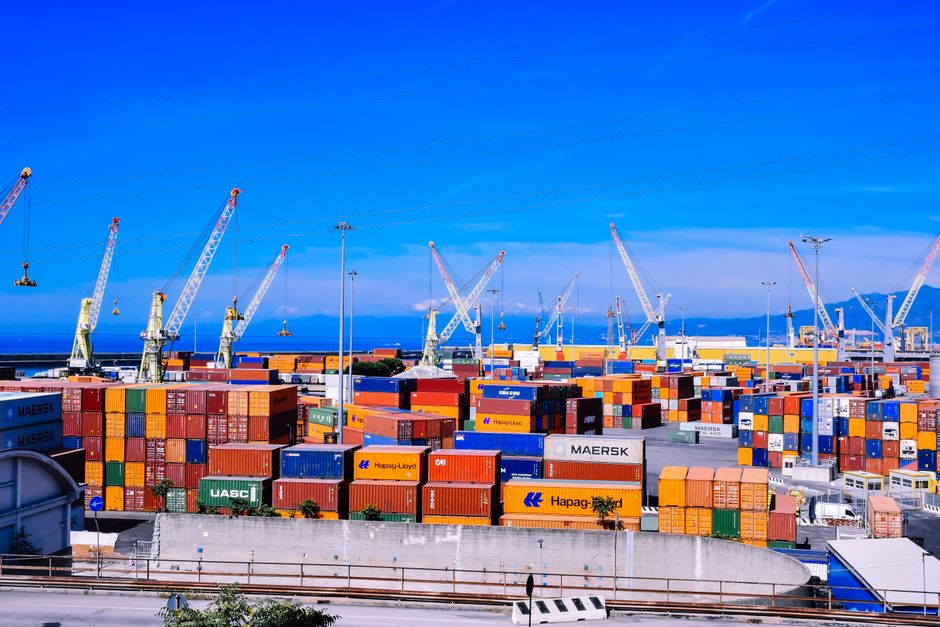
The first test is inbound capability. A 3PL distribution centre should manage freight from the moment a container arrives at a UK port. Port-centric locations near Felixstowe, Southampton, or Tilbury reduce inbound haulage costs by up to 30 percent compared to inland hubs in the Midlands or North West. That saving compounds with every container. When a 3PL sits an hour or more from the port, brands pay for secondary trucking, driver waiting time at the dock, and the administrative friction of coordinating a separate freight forwarder. A port-centric 3PL distribution centre eliminates those layers.
The second test is channel complexity. Brands that sell wholesale to retailers and direct to consumers need a WMS that can route a pallet pick for a supermarket distribution centre through one workflow and a single-unit gift-wrapped D2C order through another, without cross-contamination, delay, or inventory errors. Many 3PLs optimise for one channel and bolt on the other. The result is SLA misses, mis-picks, and frustrated retail buyers.
The third test is compliance depth. ISO 9001 is table stakes. What separates a genuine strategic partner from a generic warehouse is sector-specific certification: OF&G organic accreditation for food and supplement brands, FHDDS compliance for high-value or regulated goods, and batch-level traceability that survives an audit. Most 3PLs cannot offer these. CBF Fulfilment built its operation around them.
There is also the question of scale. Industry data suggests brands shipping under 1,000 orders per month may struggle to justify the cost of outsourcing fulfilment. Above that threshold, the economics flip: a 3PL distribution centre with established carrier relationships, bulk shipping rates, and dedicated returns processing becomes a net positive for margin and operational focus. The decision is not simply about cost per pick. It is about whether your current setup can absorb a 5x peak season volume spike without breaking your team, your customer reviews, or your retailer relationships.
The CBF Fulfilment Difference – Port-Centric Logistics Meets Organic Certification
Why Our Location Near the UK’s Largest Ports Saves You Money
The geography of your 3PL distribution centre has a direct and measurable impact on your landed cost per unit. CBF Fulfilment operates near the UK’s largest container ports, which means your goods move from ship to warehouse in a single, short leg. Container devanning happens on arrival at our facility, not at a dockside holding area followed by a costly truck journey to an inland warehouse. That secondary haulage, common in the industry, adds between £150 and £400 per container depending on distance and fuel surcharges. Over a year of regular imports, the difference runs into five figures.
Customs management is integrated into this inbound flow. CBF handles UK import duties and customs clearance as a core part of the 3PL distribution centre service. There is no separate freight forwarder to coordinate, no gap between customs release and warehouse receipt where stock sits in limbo, and no finger-pointing when a clearance delay holds up orders. Our in-house team works directly with CHIEF and CDS entries, commodity code classification, and duty deferment accounts. The result is a single point of accountability from port to dispatch.
For brands importing from Asia, the cost comparison is stark. A typical pallet from China routed through a Midlands 3PL incurs port-to-DC trucking that can represent 15 to 20 percent of the total inbound logistics cost. CBF’s port-centric model cuts that leg by 60 to 70 percent. Those savings either drop straight to your bottom line or allow you to price more competitively in a market where every pound of margin matters.
OF&G Organic Certification – A Rare 3PL Capability
Selling organic food, supplements, or personal care products in the UK comes with a hard requirement: your entire supply chain must maintain organic integrity, and that includes your 3PL distribution centre. The Organic Food Federation (OF&G) certifies every link in the chain, from farm to fulfilment. If your warehouse cannot demonstrate proper segregation of organic and non-organic stock, documented cleaning protocols, and full batch traceability, your certification is at risk. Your product labels become legally indefensible.
CBF Fulfilment holds OF&G organic certification, a capability that is genuinely rare among UK 3PLs. The certification process requires regular inspections, rigorous audit trails, and operational procedures that go well beyond standard warehouse practice. Organic stock must be physically separated from conventional goods. Cleaning between handling different product categories must be documented. Every movement of organic inventory must be traceable from receipt to dispatch, with batch codes recorded at every touchpoint. When an OF&G auditor arrives, the paperwork and the physical reality must match.
For brands selling through Whole Foods, Ocado, Planet Organic, or direct-to-consumer with organic claims on the label, this is non-negotiable. A 3PL distribution centre without organic certification is a compliance gap waiting to surface at the worst possible moment: during a retailer onboarding audit, a customer complaint investigation, or a routine OF&G inspection. CBF’s certification means your organic status travels intact through the fulfilment process. Batch tracking for recalls is built into the WMS architecture, not retrofitted as a manual workaround. If a quality issue triggers a recall, we can identify every affected unit, every customer who received it, and every retailer shelf it reached, within hours.
Managing Dual Workflows – Wholesale and D2C Under One Roof
The operational gap between wholesale fulfilment and direct-to-consumer fulfilment is wider than most brands anticipate. Wholesale orders are palletised, booked days in advance, transmitted via EDI, and delivered to retailer distribution centres with strict booking slots and 48-hour lead times. D2C orders are single-unit picks, often placed after 6 PM, expected to ship same-day or next-day, and delivered in branded packaging with personalised inserts. The picking logic, packing stations, carrier allocations, and SLA frameworks for these two channels share almost nothing in common.
Many 3PLs claim to handle both. In practice, they optimise for one and treat the other as an inconvenience. Wholesale-focused warehouses struggle with the pick-and-pack speed and branded presentation that D2C demands. Ecommerce-focused 3PLs fumble the pallet-building, EDI integration, and retailer compliance documentation that wholesale requires. The result is late deliveries to supermarket RDCs, mis-picked D2C orders, and a customer service inbox that never stops pinging.
CBF’s WMS segments these workflows at the system level. Wholesale orders route to a bulk-picking zone where pallets are built, wrapped, and labelled for retailer receipt. D2C orders route to dedicated pick-and-pack stations configured for speed, accuracy, and branded presentation. Inventory is allocated dynamically between zones to prevent stock conflicts. A wholesale pallet pick and a D2C single-unit order for the same SKU can process simultaneously without cross-contamination or delay. The system maintains separate SLA tracking for each channel, so a busy D2C afternoon does not push a wholesale booking slot out of compliance.
Returns handling follows the same dual-track logic. Wholesale returns arrive as pallets requiring quality inspection, restock or quarantine decisions, and credit documentation for the retailer. D2C returns arrive as individual parcels needing inspection, repack or disposal, and customer refund processing. CBF offers standalone returns processing for overseas brands that do not require a full fulfilment contract, a niche service that addresses a genuine gap in the UK 3PL market. A brand selling into UK retailers from Europe or North America can route returns to CBF without relocating their entire fulfilment operation.
Peak season scaling is built into the facility footprint and staffing model. With over 100,000 square feet of warehousing space and the capacity to flex up to 120 full-time equivalent staff, CBF absorbs volume spikes of 5x baseline without SLA misses. The dual-workflow design means wholesale peaks, typically driven by retailer Christmas stock builds in September and October, do not collide with D2C peaks in November and December. Each channel has its own resource allocation, its own surge plan, and its own performance dashboard.
UK Import Duties and Taxes – What Your 3PL Distribution Centre Should Handle
Post-Brexit, importing goods into the UK means navigating customs declarations, duty calculations, and VAT accounting that did not apply when the UK sat inside the single market. A 3PL distribution centre that cannot manage these processes is not a partner; it is a bottleneck. Every container that arrives at a UK port triggers a chain of customs events: the entry summary declaration, the customs clearance request, the commodity code classification, the duty calculation, and the VAT treatment. Errors at any point mean delays, storage charges at the port, and unhappy customers.
CBF’s in-house customs brokerage handles this end-to-end. Our team works with CHIEF and CDS, the two systems governing UK customs entries, to ensure declarations are accurate and submitted before the vessel arrives. Commodity codes are audited against your product specifications to prevent overpayment of duties. Temporary storage arrangements defer duty payment until goods are physically needed for fulfilment, improving cash flow for brands that hold buffer stock in the UK.
The tax mechanics are worth understanding clearly. Import VAT is charged at 20 percent on most goods entering the UK, but postponed VAT accounting means you declare and reclaim it on the same VAT return. There is no net cash flow impact for VAT-registered businesses, provided the paperwork is correct. Customs duties vary by product category, ranging from zero on many electronics to 25 percent on certain food products. CBF audits your commodity codes to ensure you are not paying the higher rate that applies to a superficially similar but differently classified product. Anti-dumping duties and safeguard measures, particularly on Chinese steel, ceramics, and some textiles, can add punitive charges if not flagged before import. Our team identifies these risks during the inbound planning stage, not after the container has arrived and the charges are accruing.
For brands selling into the EU post-Brexit, CBF can coordinate with a partner distribution centre near Amsterdam to create a fulfilment bridge. Goods flow from the UK to the EU facility under customs control, avoiding double duty charges and maintaining delivery speed to European customers. This model mirrors the approach used by several leading UK 3PLs and addresses the single biggest headache for British brands that built their customer base before the trade border went up.
Transparent Pricing – The 3PL Cost Breakdown You Rarely See
The 3PL industry has a transparency problem. Most providers publish no pricing at all, requiring a sales call and an NDA before revealing even indicative rates. The research confirms this: no major UK 3PL source provides comprehensive, comparable pricing across providers. Brands shopping for a 3PL distribution centre are forced to submit multiple RFQs, wait weeks for responses, and then compare quotes structured in deliberately incompatible formats. This opacity serves the provider, not the customer.
CBF Fulfilment takes a different approach. The following indicative cost ranges reflect UK market rates for 2026, based on typical volumes and service levels. Bespoke quotes will vary by volume, product characteristics, and service mix, but these figures give you a genuine starting point for comparison.
Pallet storage runs from £2.50 to £5.50 per pallet per week, depending on volume commitments and storage duration. Pick-and-pack for D2C orders ranges from £0.65 to £1.80 per item, with the rate driven by order complexity, packaging requirements, and monthly volume. Wholesale pallet picks start from £8.00 per pallet, covering pick, wrap, label, and loading. Returns processing, including inspection and restock, costs between £1.50 and £3.00 per unit. Customs clearance runs from £25 to £50 per entry, with no hidden broker fees or surprise disbursement charges.
These rates include the operational overhead of organic certification, batch tracking, and dual-channel WMS management. Peak season surcharges, hazardous goods handling fees, and organic segregation costs are priced upfront in the contract, not added as a quarterly shock when the invoice arrives. If a cost is not in the agreement, it does not appear on the bill.
For brands evaluating multiple 3PL proposals, CBF provides a downloadable comparison checklist that standardises the key cost categories, SLA metrics, and compliance capabilities across providers. This tool addresses the content gap identified in the research and gives you a structured way to cut through the fog of non-comparable quotes.
Technology and Integration – WMS, EDI, and Real-Time Visibility
The WMS is the brain of a 3PL distribution centre, and its capabilities determine whether your fulfilment operation runs smoothly or generates a constant stream of exceptions. CBF uses a modern warehouse management system with real-time inventory visibility, barcode scanning at every touchpoint, and automated carrier allocation based on order weight, destination, and service level. The system tracks pick accuracy, dispatch cut-off performance, and inventory ageing, giving both CBF operations managers and brand clients a live view of what is happening on the floor.
Integration is not a custom development project. CBF maintains native connectors for Shopify, WooCommerce, and Amazon Seller Central, covering the platforms used by the vast majority of D2C brands in the UK. For wholesale accounts, EDI integration handles the purchase order formats required by Tesco, Sainsbury’s, Ocado, and other major retailers. Orders flow from your sales channels into the WMS without manual rekeying, and dispatch confirmations, tracking numbers, and inventory updates flow back automatically.
The client portal provides a live dashboard showing stock levels by SKU and batch, order status from receipt to dispatch, and performance against agreed SLAs. If you need to know whether a specific pallet has been picked for a retailer delivery or whether a D2C order made the 4 PM cut-off, the answer is on the screen, not in an email thread waiting for a warehouse manager to reply.
Sustainability metrics are tracked and reported, addressing another gap in the 3PL market. CBF provides carbon footprint per order, waste diversion rates, and packaging optimisation data. Brands that report Scope 3 emissions or hold B Corp certification can use this data for their own sustainability reporting without having to estimate or extrapolate from generic industry averages.
Is CBF Fulfilment the Right 3PL Distribution Centre for Your Brand?
The best-fit assessment is straightforward. CBF Fulfilment is designed for brands that ship 1,000 or more D2C orders per month, or 50 or more wholesale pallets per month, and that import goods into the UK requiring customs support. If you hold organic certification or are pursuing it, the OF&G-accredited facility is a hard requirement that eliminates most competing 3PLs immediately. If you sell through both retail and direct channels and want a single partner managing both workflows, the dual-channel WMS architecture is built for you.
There are scenarios where CBF is not the optimal choice. If your customer base is concentrated in Scotland and Northern Ireland and next-day delivery coverage from a central England location is your overriding priority, a Midlands-based 3PL may offer a marginal speed advantage. If you only ship within the EU and have no UK import requirement, a continental European facility may serve you better. For everyone else, the combination of port-centric location, organic certification, customs expertise, and dual-channel capability makes CBF a strong candidate for your shortlist.
The next step is a free logistics audit. CBF will review your current shipping costs, duty payments, warehouse efficiency, and channel mix, then provide a no-obligation quote and a detailed operational proposal. The audit typically reveals savings opportunities that pay for the fulfilment service itself, particularly in inbound freight and customs duty optimisation.
Frequently Asked Questions About 3PL Distribution Centres in the UK
What is the difference between a 3PL and a 4PL?
A 3PL executes logistics operations: warehousing, pick-and-pack, shipping, and returns. A 4PL manages the entire supply chain strategy, often coordinating multiple 3PLs, freight forwarders, and technology providers on behalf of the brand. Most growing brands need a capable 3PL distribution centre first; 4PL relationships typically suit larger enterprises with multi-continent supply chains.
How much does a 3PL distribution centre cost in the UK?
Indicative ranges for 2026 include pallet storage at £2.50 to £5.50 per pallet per week, D2C pick-and-pack at £0.65 to £1.80 per item, wholesale pallet picks from £8.00 per pallet, and returns processing at £1.50 to £3.00 per unit. Customs clearance adds £25 to £50 per entry. Bespoke quotes based on your actual volumes and product characteristics are essential for accurate budgeting.
Can a 3PL handle both B2B and D2C orders?
Yes, provided the WMS and warehouse layout are designed for dual workflows. CBF’s system routes wholesale and D2C orders through separate picking zones and SLA frameworks, preventing the channel conflict that plagues single-workflow warehouses.
Do I need organic certification for my 3PL?
Only if you sell organic products. If you do, the requirement is absolute: your 3PL distribution centre must hold OF&G or equivalent certification, or your own organic certification is compromised. CBF’s OF&G accreditation ensures your compliance chain remains intact from port to customer.
How do I know if I am ready for a 3PL?
The 1,000-order-per-month threshold is a useful benchmark. Below that, the economics of outsourcing may not stack up. Above it, the combination of bulk shipping rates, operational efficiency, and freed management time typically makes a 3PL distribution centre a net positive investment. The best-fit checklist in the section above provides a more detailed readiness assessment.

Looking for a Reliable Fulfilment Partner?
Whether you're sending 1,000 items or managing ongoing fulfilment requirements, we're here to help.