
3PL Tender Guide 2026: Cut Through Marketing Hype | CBF Fulfilment
Let’s be honest: reading a 3PL proposal is usually about as fun as assembling flat-pack furniture. But unlike that IKEA wardrobe, your supply chain can’t afford a missing screw. Running a 3PL tender is a necessary headache, but without the right checklist, you’re just comparing marketing budgets. Every provider in 2026 claims to be “best-in-class,” “scalable,” and “technology-driven.” The glossy PDFs all look the same. The sales decks promise the earth. Yet six months after you sign, you discover that same-day dispatch actually means “same day, if the order arrived before 9:17 AM on a Tuesday with a following wind.”
Table of Contents
- The Three Cost Centres That Tenders Love to Hide
- Dispatch Claims vs. Actuals: The Truth in the Data
- WMS Capabilities: Why “Integrates with Everything” Is a Red Flag
- The Offshore Client Advantage: Why UK 3PLs Need to Think Global
- Red Flags in the Tender: The 2026 Edition
- The 8-Step Tender Process: Condensed for 2026
- Why CBF Fulfilment Survives the Filter
- Conclusion: The Tender Is Just the Start
This guide exists to give you a cynical, practical filter. We’ll walk through the questions that separate genuine capability from well-funded copywriting. We’ll look at where tenders hide the truth, how to test technology claims before you commit, and why the quiet 3PL in Gloucester with thirty years of scar tissue might serve you better than the venture-backed disruptor with a chatbot and a dream.
The Three Cost Centres That Tenders Love to Hide
Every 3PL tender response will include a rate card. Most of them are works of fiction. Not because anyone is lying, exactly, but because the numbers are presented in a way that makes comparison deliberately difficult. The trick is to understand the three cost centres and force every provider to break them out separately.
Storage is the headline grabber. You’ll see pallet rates quoted per week, per square foot, or per cubic metre. Low storage rates are the bait. A provider might charge thirty pence per pallet per day and look impossibly cheap. But storage is only one leg of the stool.

Picking and packing is where the margin lives. A provider with rock-bottom storage will often charge per pick, per item, per packaging type, per label, per insert, and per moment of human attention. If you sell multi-line orders with gift wrapping and marketing inserts, your effective pick cost might be five times what the headline rate suggested. Ask for a worked example using your actual order profile from the last quarter. Not a generic basket of three items. Your data.
Distribution is the third cost centre and the one most likely to contain surprises. Fuel surcharges, residential delivery premiums, Saturday dispatch fees, and returns processing per unit all sit here. Some 3PLs will quote a blended rate that looks tidy but collapses under scrutiny when you realise it assumes 90% of your orders go to mainland UK postcodes and weigh under two kilos.
CBF Fulfilment offers no setup fees, which is genuinely unusual and welcome. But even then, ask what you’re paying for in the first month instead. Minimum order charges, storage minimums, and account management retainers can all masquerade as something other than a setup fee. The only number that matters is the total cost per order projection based on your actual sales mix. Demand it.
Dispatch Claims vs. Actuals: The Truth in the Data
Every 3PL promises same-day dispatch. It’s the industry’s favourite marketing line, right up there with “dedicated account manager” and “fully scalable solution.” The reality is often a 48-hour cut-off window dressed up in optimistic language.
The gap between the claim and the actual is where your customer experience lives. A provider might define “same-day dispatch” as any order received before 11 AM, but quietly exclude weekends, bank holidays, and the entire month of December. If your ecommerce store takes orders until 8 PM, those evening customers are already waiting until the following afternoon before anything moves. Add a day for the warehouse backlog and suddenly your “next-day delivery” promise is three days late.
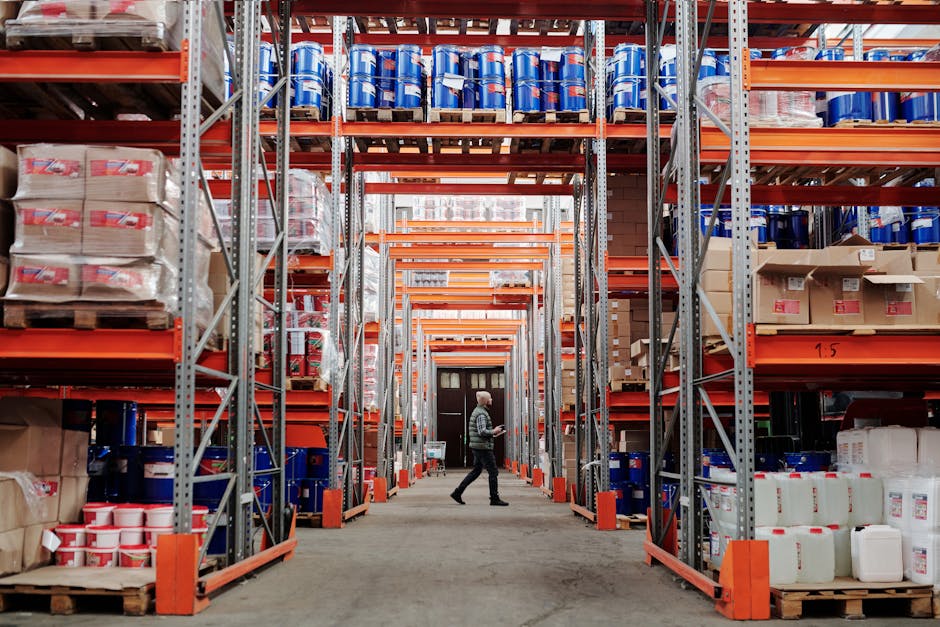
Before you evaluate anyone’s claims, audit your own data. Run a thirty-day analysis of your current fulfilment operation. What percentage of orders actually ship within your advertised window? What happens on Mondays, when the weekend backlog hits? What happens during your seasonal peaks? If you don’t know your own baseline, you can’t judge a 3PL’s promises.
CBF Fulfilment has been operating since 1986. That’s nearly four decades of dispatch data, seasonal pattern recognition, and hard-won operational honesty. When a provider has survived multiple recessions, Brexit, and the ecommerce boom, their actuals tend to be closer to their claims than a startup 3PL still figuring out where the fire exits are.
WMS Capabilities: Why “Integrates with Everything” Is a Red Flag
The warehouse management system is the brain of a 3PL operation. When a tender response says the WMS “integrates with everything,” what it often means is that it integrates adequately with nothing. Generic WMS platforms handle simple pick-pack-ship workflows competently. They fall apart when you introduce complexity: batch tracking for supplements, lot number control for cosmetics, bonded stock for alcohol, or serial number capture for electronics.
The “one-size-fits-all” WMS is a trap. It forces manual workarounds. Your products get picked correctly, but the system can’t record the batch number, so a recall becomes impossible. Your FBA shipments go out, but the carton labelling is wrong, and Amazon rejects the pallet. These failures don’t appear in the sales deck. They appear in your chargeback reports six weeks later.
CBF Fulfilment uses Mintsoft, a mid-market WMS that handles complexity without the six-figure enterprise price tag. Mintsoft is particularly strong on multi-channel workflows. It manages FBA prep, bundle kitting, and D2C orders on the same screen, with proper inventory synchronisation across platforms like Shopify, WooCommerce, Amazon, and eBay. For a business running multiple sales channels, that single-screen visibility is the difference between confident scaling and constant firefighting.
The tender should include a Technology Appendix. Demand a live API demonstration. Not a PDF slide deck. Not a pre-recorded walkthrough. A real-time screen share where you can ask to see how the system handles a specific scenario: a subscription box with three SKUs, one of which is age-restricted, shipping to Northern Ireland. If the demo falters, the integration will falter too.
D2C vs. B2B Workflow Differences
Many 3PLs are built for one channel and pretend to handle both. Direct-to-consumer fulfilment requires single-unit picking, branded packaging, gift messages, and marketing inserts. Business-to-business fulfilment requires pallet labelling, EDI connectivity, booking-in slots with retailers, and compliance with vendor manuals that run to eighty pages.
The two workflows demand different pick faces, different packing stations, and different quality control processes. A 3PL that’s brilliant at D2C might crumble when you land a wholesale order for two hundred units to a department store with a strict delivery window and specific pallet configuration requirements.
CBF Fulfilment handles over thirty product categories: cosmetics, alcohol, supplements, pet products, bicycles, homewares, gadgets. That breadth forces a flexible WMS and a warehouse team comfortable switching between workflows. Bundle kitting is the ultimate stress test. A subscription box containing an alcohol product, a cosmetic item, and a gadget requires age verification, batch tracking, and multi-SKU assembly in a single workflow. If a 3PL can kit that box accurately at scale, they can probably handle your business.
The Offshore Client Advantage: Why UK 3PLs Need to Think Global
Eighty percent of CBF Fulfilment’s clients are based offshore, primarily in the United States, Australia, and the European Union. That statistic is worth pausing over. It means the majority of their client base chose a UK fulfilment partner despite having local options. The reason is straightforward: the UK offers next-day delivery to a dense population of sixty-seven million people, and for international brands, that speed is genuinely startling.
American and Australian clients are often amazed by UK delivery times. A package that takes five days to cross New South Wales can reach Aberdeen overnight from Gloucester. The UK becomes a gateway to European markets, with established carrier relationships, customs expertise, and a time zone that overlaps with both Asian and American business hours.
If you’re running a 3PL tender, ask about the provider’s offshore client experience. Can they handle customs documentation? Do they understand duty deferment? Can they manage international returns without losing inventory in a black hole of reverse logistics? A 3PL that can keep a client in Sydney happy from a warehouse in Gloucester has proven its communication processes under pressure. If they can handle that distance, they can handle your peak season.
Red Flags in the Tender: The 2026 Edition
Some warning signs are timeless. Others have evolved as the 3PL industry has consolidated and technology has advanced. Here are the red flags that should make you pause in 2026.
Vague SLAs top the list. If the service level agreement doesn’t specify a dispatch cutoff time with a precise delivery promise, it’s not an SLA. It’s a wish. “We aim to dispatch within 24 hours” is meaningless. “Orders received by 4 PM are dispatched same day for next-working-day delivery to UK mainland addresses, with 98.5% compliance measured monthly” is an SLA. Demand the latter.
Seasonal capacity promises are the second red flag. Every 3PL claims they can handle your Black Friday spike. Few can. The solution is a Seasonal SLA Addendum, a contractual tool that ties performance thresholds to financial rebates during peak periods. If the 3PL misses dispatch targets during November and December, your rates drop. If they hit them, they earn their margin. This concept separates serious operators from optimists.
The “Tier 1” trap is subtler. Smaller 3PLs sometimes outgrow their infrastructure. They win clients, fill their warehouse, and suddenly hit a capacity ceiling. Your business becomes a problem rather than a partner. Ask directly: what percentage of your current capacity are you operating at, and what happens when you reach 90%? A good answer includes a concrete expansion plan. A bad answer is a reassuring smile.
Communication black holes are the final red flag. Many modern 3PLs hide behind portals and ticketing systems. You submit a query, receive an automated reference number, and wait. Days later, a response arrives that doesn’t answer your question. The cycle repeats. This is account management by exhaustion: they hope you’ll give up.
Communication Options: The Human Element
The technology that powers 3PL communication has improved dramatically. The quality of actual human communication has not. Chatbots and automated status updates are useful supplements. They are disastrous replacements.
CBF Fulfilment operates on a model of real human account management. That means a named person who knows your business, answers the phone, and calls you proactively when a shipment is delayed. The difference between proactive and reactive communication is the difference between managing a problem and discovering a disaster.
During the tender process, test this. Call the provider’s main number at 4:45 PM on a Friday. See who answers. Ask for a sample of their dispatch accuracy reports from the last ninety days. If they hesitate, or if the report is a PDF of summary statistics rather than raw data, you’ve learned something valuable. Transparency isn’t a policy. It’s a habit.
The 8-Step Tender Process: Condensed for 2026
A formal 3PL tender doesn’t need to take six months. It needs to be thorough in the right places. Here’s the condensed process.
Step one: define your non-negotiables. These are the capabilities without which the relationship fails. Alcohol licensing. FBA preparation. Bundle kitting. Temperature-controlled storage. Hazardous goods handling. Write them down before you speak to anyone.
Step two: the RFI. Send a short request for information to five to ten providers. Ask basic questions about capacity, client profile, and service offering. Eliminate anyone who can’t answer clearly within a week.
Step three: the RFP. Request a formal proposal with the three cost centres broken out separately. Provide your actual order data for the last quarter. Demand a total cost per order projection.
Step four: the site visit. Walk the warehouse. CBF Fulfilment operates a 42,000 square foot facility in Gloucester. Look for dust on the racking, disorganisation in the packing area, and idle staff scrolling through phones. A well-run warehouse has a rhythm. You can feel it.
Step five: the WMS demo. Live API test, not a slideshow. Bring your most complex product scenario and watch them process it in real time.
Step six: reference calls. Speak to an offshore client specifically. Ask about communication, problem resolution, and what happened during their last peak season.
Step seven: the seasonal addendum. Negotiate peak capacity guarantees with financial teeth.
Step eight: the soft launch. Start with a hundred orders, not ten thousand. Monitor everything. Then scale.
Why CBF Fulfilment Survives the Filter
CBF Fulfilment has been operating since 1986. That track record means they’ve seen recessions, Brexit, the ecommerce boom, and every supply chain disruption the modern era has produced. They’re still here because they deliver what they promise.
The technology stack is Mintsoft WMS, with free API integrations and free online stock control software. No setup fees. No hidden platform charges. The warehouse handles over thirty product categories, which means the team doesn’t panic when you launch a new SKU or pivot into a different channel.
The testimonials back this up. iNKSHIP, Hyde & Hare, and nohma.com have all spoken publicly about the growth support and operational reliability they’ve experienced. These aren’t anonymous quotes on a website. They’re real businesses that made the same tender decision you’re facing.
CBF Fulfilment isn’t the cheapest 3PL in the UK. But it is the one that answers the phone when your dispatch claims go wrong. In a market full of providers who promise the world and deliver a portal login, that matters more than a few pence per pick.
Conclusion: The Tender Is Just the Start
A 3PL tender is a marriage, not a date. The contract signing is the beginning of the relationship, not the end of the process. The provider you choose will touch your customers, handle your inventory, and represent your brand in a cardboard box on a doorstep. Choose with your eyes open.
Contact CBF Fulfilment for a no-obligation, transparent quote that includes the three cost centres broken out and a live WMS demonstration. Your supply chain is too important to trust to a PDF. Let’s talk.

Looking for a Reliable Fulfilment Partner?
Whether you're sending 1,000 items or managing ongoing fulfilment requirements, we're here to help.