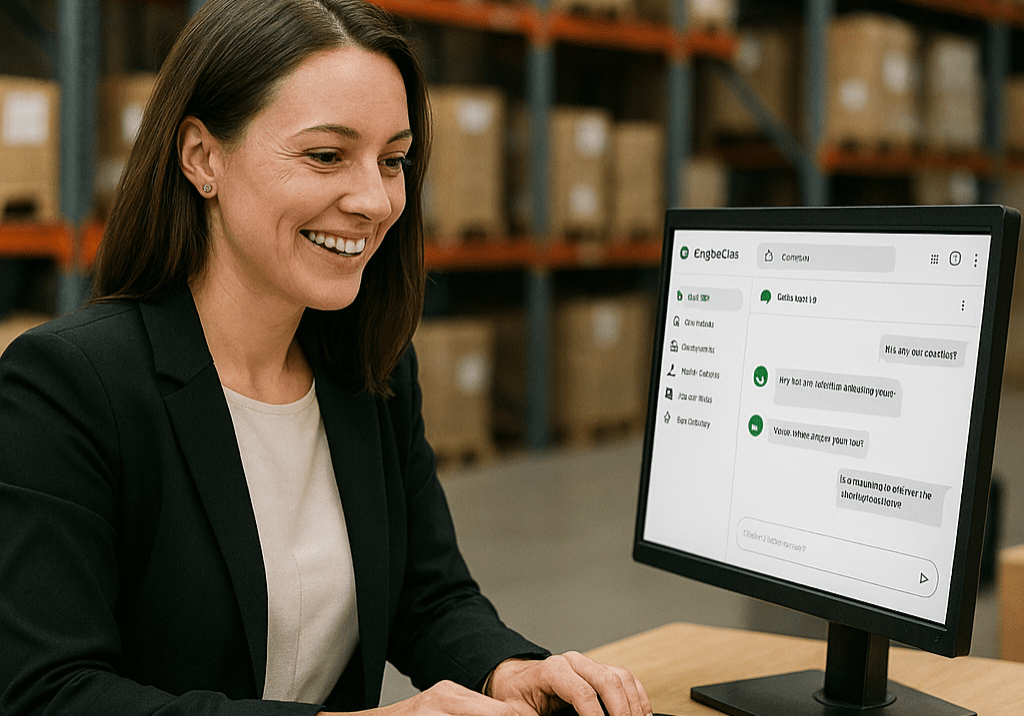
Book 3PL Publishers Fulfilment Warehouse Distribution | UK Services
There comes a moment in every publisher’s life when the spare bedroom vanishes under a landslide of jiffy bags, the dining table becomes a permanent packing station, and the post office staff start greeting you by name with a look of quiet pity. That moment is the signal. Whether you are shipping a single signed hardback to a devoted reader in Edinburgh or dispatching three pallets of textbooks to a university in Manchester, the logistical tangle of Book 3PL publishers Fulfilment Warehouse Distribution is not something you can fudge with gaffer tape and good intentions. Outsourcing to a specialist third-party logistics partner is not an admission of defeat; it is the smartest growth decision you will make this year. The UK publishing scene has been underserved by fulfilment advice that actually speaks to British realities, but that gap is closing.
Table of Contents
- Why Your Book Business Needs a 3PL Partner (And Why Doing It Yourself is a Plot Hole)
- The CBF Fulfilment Difference: UK-Based, Global Reach
- The Anatomy of a Flawless Book Fulfilment Workflow
- The Real Cost of Fulfilment: What the US Guides Won’t Tell You
- Is a 3PL Right for You? (A Quick Self-Assessment)
- Conclusion: Stop Packing Boxes, Start Publishing Books
Why Your Book Business Needs a 3PL Partner (And Why Doing It Yourself is a Plot Hole)
Most publishers start out handling their own fulfilment, and that makes sense when you are shifting twenty copies a month. The trouble creeps in quietly. First, you need more shelf space. Then you need a proper inventory system that does not rely on a scribbled notebook. Then you need packing materials in bulk, a printer for labels, a courier account, and suddenly your marketing budget is being swallowed by bubble wrap. The hidden costs of in-house fulfilment are not just financial; they are temporal. Every hour spent taping boxes is an hour not spent commissioning authors, building your brand, or planning the next title.

There is also what we call the scalability trap. A single favourable review, a mention on a popular podcast, or the approach of the Christmas gift-buying season can triple your order volume overnight. A DIY setup that coped admirably with fifty orders a week will buckle under two hundred. Stock runs out, dispatch times slip, and customers who might have become lifelong fans receive their books late and grumpy. Reputation damage in publishing is hard to undo.
Then there is the workflow split that few people talk about. Direct-to-consumer orders, the D2C side, demand speed, presentation, and careful tracking. A reader who has pre-ordered a signed first edition wants it to arrive in pristine condition, ideally with a personalised note. A B2B order from a bookshop chain or a university library is a completely different animal: palletised loads, strict labelling protocols, delivery windows, and invoice reconciliation. Treating these two workflows as if they are the same is a fast track to chaos. If your living room currently resembles a distribution centre after an earthquake, it is time to call a professional.
The CBF Fulfilment Difference: UK-Based, Global Reach
Search for book fulfilment advice online and you will quickly notice a pattern. Almost all the results are American. US-based warehouses, US shipping rates, US-centric advice that cheerfully ignores the existence of Royal Mail, customs declarations, and the particular joy of navigating EU VAT rules post-Brexit. CBF Fulfilment is built from the ground up for British publishers. We know the Royal Mail pricing structure inside out. We understand Parcelforce’s quirks. We can talk you through the customs paperwork for a shipment to Germany or Australia without breaking a sweat.
Our facility is not a generic storage unit that happens to hold some books. It is a purpose-designed fulfilment warehouse calibrated specifically for publications. Books are not toasters. They are heavy, oddly shaped when bundled, easily damaged by damp or rough handling, and they come in a maddening variety of sizes and weights. Our racking, our packing stations, and our entire workflow are built around that reality.

We handle both D2C and B2B workflows with equal precision. A single copy going to a reader in Bristol gets the same rigorous attention as a bulk consignment heading to a distributor in Glasgow. Our stock control systems give you real-time visibility of every title, every variant, every location. And our subscription management capability means we can handle recurring shipments, monthly book clubs, quarterly box sets, and annual series deliveries without you lifting a finger. Books go all over the world from our UK base, and they arrive on time and in perfect condition.
Mastering the Multi-Channel Mess (D2C vs. B2B)
The distinction between direct-to-consumer and business-to-business fulfilment is not just academic; it dictates everything from packaging choices to courier selection. D2C orders are about the individual experience. The book must arrive quickly, beautifully presented, with tracking information sent proactively to the customer. If the order includes a signed bookplate or a custom insert, that must be matched accurately. The unboxing moment matters, and we treat it accordingly.
B2B orders are about compliance and efficiency. Retailers and wholesalers have strict requirements for how stock is labelled, palletised, and delivered. A rejected delivery because of incorrect labelling costs time and money. Libraries and educational institutions often need specific invoicing formats and delivery documentation. Our systems switch between these two modes seamlessly. The same warehouse, the same team, the same commitment to accuracy, but the workflow adapts to the channel automatically. You do not need two separate logistics partners; you need one that understands both worlds.
The Anatomy of a Flawless Book Fulfilment Workflow
Good fulfilment is invisible. When it works, your customer simply receives the right book at the right time and thinks nothing more of it. Behind that invisibility, however, is a disciplined sequence of steps that leaves no room for error.
Receiving and inspection is the first checkpoint. When your stock arrives at our warehouse, whether it is a fresh print run from the bindery or a restock of a backlist title, every carton is checked. We look for transit damage, printing errors, and quantity discrepancies before anything enters our inventory. A damaged book that never reaches a customer is a problem solved before it starts.
Smart stock control follows. You get a real-time dashboard showing exactly what you have, where it is, and how fast it is moving. This connects directly to your printing schedule. If a title is selling faster than forecast, you see the trend early and can reorder before stock hits zero. No more frantic emails to the printer while customers wait. Our system tracks variants too: hardback versus paperback, signed versus unsigned, standard edition versus box set. Every SKU is distinct and accounted for.
Picking and packing is where the craft comes in. Books need protection. Corners must be cushioned. Paperbacks must not be allowed to slide around inside a box, scuffing their covers. Hardbacks need rigid mailers or well-filled cartons that prevent crushing. For multi-book orders, the weight distribution matters; a heavy art book should not be free to batter a slim poetry collection in transit. We use appropriate materials for every shipment, and we pack with the assumption that the parcel will be dropped, stacked, and possibly rained on. Nothing leaves our dock in a flimsy wrapper.
Shipping is the final mile, and it is where our carrier relationships pay off. We select the best service for each order based on destination, weight, and urgency. UK domestic orders might go Royal Mail Tracked 48 or Parcelforce Express. International orders are routed through the most reliable networks, with full customs paperwork prepared in advance. Tracking numbers are pushed back to your sales platform automatically, so your customer knows exactly where their parcel is.
Subscription management deserves special mention because it is a growing channel for publishers. Monthly book clubs, serialised fiction, academic journal subscriptions, annual almanacs: all of these require recurring, automated dispatch. Our system handles the entire lifecycle. It charges the customer, triggers the pick, packs the order, and ships it on schedule. Subscribers can update their addresses, pause deliveries, or cancel without involving you. The administrative burden drops to near zero.
Value-Added Services: More Than Just a Box
Fulfilment is not only about moving stock from A to B. Publishers increasingly need services that add value and differentiate their offerings. Kitting is a prime example. If you want to bundle a book with a bookmark, a mug, a tote bag, or an exclusive print, we assemble those kits under one roof. The components arrive separately, we combine them, and the finished bundle ships as a single unit.
Custom inserts and signed copies require careful handling. A signed bookplate must be matched to the correct title and edition. A handwritten note from the author must reach the right reader. These are not tasks for a generic warehouse; they demand attention to detail and a system that tracks personalisation at the order level. We provide that.
Shrink-wrapping and eco-friendly packaging round out the offering. Some retailers require shrink-wrapped stock for shelf display. Some customers demand plastic-free packaging. We accommodate both, using recyclable and biodegradable materials wherever possible without compromising the protection your books need.
The Real Cost of Fulfilment: What the US Guides Won’t Tell You
One of the most frustrating gaps in the online conversation about book fulfilment is the near-total absence of transparent pricing. American providers dominate the search results, and they are remarkably coy about what things actually cost. We prefer a different approach.
Fulfilment pricing typically breaks down into three components. Storage is charged either per pallet or per shelf bin, depending on volume. Pick and pack fees cover the labour of selecting each item and preparing it for dispatch; these are usually charged per order or per item. Shipping costs vary by carrier, destination, weight, and speed. UK domestic rates are competitive and predictable. International shipping is more complex, but a good 3PL partner will help you navigate the options and avoid nasty surprises.
The industry statistic that clients save around twenty per cent on freight when switching to a specialist provider holds true, but that figure comes from US data. British publishers need British rates, and the savings here are equally real. Consolidating your shipping volume through a 3PL unlocks carrier discounts you cannot access as a solo shipper. Add in the time you reclaim and the errors you eliminate, and the return on investment becomes compelling.
We do not charge setup fees. We do not lock you into long-term contracts. Our pricing is transparent, scalable, and discussed openly before you commit. If a fulfilment provider cannot give you a clear cost breakdown, walk away.
International Shipping and Customs: The Brexit Factor
Sending books abroad used to be straightforward. Post-Brexit, shipping to the EU involves customs declarations, VAT handling, and occasional border delays that can frustrate customers if not managed properly. We handle this daily. Our systems generate the correct paperwork for every destination, and we stay current with regulatory changes so your parcels do not get stuck in a warehouse in Calais.
Shipping to the United States, Australia, Canada, and other non-EU markets has its own requirements. Transit times vary, costs fluctuate, and each country has its own import rules for printed matter. A UK-based 3PL with global experience anticipates these variables and builds them into your fulfilment strategy. Your customers abroad receive their books without unexpected charges or delays, and you avoid the reputation damage that comes from botched international deliveries.
Is a 3PL Right for You? (A Quick Self-Assessment)
Not every publisher needs a third-party logistics partner, but many more do than currently use one. You are a strong candidate if any of the following describes your situation.
You are a self-publisher or indie author whose order volumes have outgrown the kitchen-table operation. You are a small-to-mid-size publisher looking to scale without taking on warehouse leases and staff. You are an online bookseller who needs to reduce shipping costs and improve delivery times to compete with the big players. You are an educational publisher with seasonal demand spikes tied to academic terms, curriculum changes, or exam cycles. If you nodded at any of those, a conversation with a specialist 3PL is overdue.
Conclusion: Stop Packing Boxes, Start Publishing Books
Every minute you spend wrestling with parcel tape is a minute stolen from the work that actually grows your business: finding authors, building your list, connecting with readers, and making your books impossible to ignore. The UK publishing industry has been underserved by fulfilment providers who truly understand the book trade, and CBF Fulfilment exists to close that gap.
We offer UK-based, globally capable fulfilment with accurate stock controls, subscription management, and the flexibility to handle everything from a single signed copy to a lorry-load of textbooks. Our workflow respects the difference between D2C and B2B, and our pricing is transparent from day one. If you are ready to reclaim your time and unlock the efficiency that a specialist 3PL provides, get in touch. Request a quote, ask for a warehouse tour, or simply start a conversation about what your fulfilment could look like when it is done properly. The boxes can wait. Your next book cannot.

Looking for a Reliable Fulfilment Partner?
Whether you're sending 1,000 items or managing ongoing fulfilment requirements, we're here to help.