Book Publishers 3PL: Streamline Fulfilment & Scale in 2026
If you run a book publishing business, you already know the truth: the romance of the written word collides daily with the grim reality of packing tape, bubble wrap, and Royal Mail queues. Your spare room looks like a library exploded, your dining table has become a makeshift packing station, and you have developed an intimate hatred for jiffy bags. There is a better way. Specialist Book Publishers 3PL services exist precisely to rescue you from this chaos, handling storage, picking, packing, and shipping while you focus on what you actually set out to do: publish great books. By the end of this guide, you will understand exactly how a specialist 3PL can transform your operations, from Amazon FBA prep to subscription box management, without the soul-destroying logistics that currently eat your weekends.
Table of Contents
- Why Your Book Business Needs a Specialist 3PL (Not Just a Warehouse)
- Core Services: What a Book-Focused 3PL Should Offer
- Amazon FBA Prep: The Silent Efficiency Killer
- Communication Transparency: The Antidote to Shipping Anxiety
- Integration and Technology: Making Your Sales Channels Sing
- The Cost Question: Is a 3PL Worth It for Small Publishers?
- Conclusion: Stop Packing Boxes, Start Publishing Books
Why Your Book Business Needs a Specialist 3PL (Not Just a Warehouse)
Books are deceptively difficult products to handle. They are heavy, fragile, and come in a maddening variety of sizes. A trade paperback behaves very differently in transit to a coffee-table hardback, and woe betide the fulfilment house that treats them identically. Generalist 3PLs, the ones that happily ship electronics, clothing, and protein powder with equal indifference, rarely understand the peculiar demands of book logistics.

The hidden costs of DIY fulfilment are brutal once you add them up honestly. Your time has value, and every hour spent wrestling with parcel tape is an hour not spent on acquisitions, editing, or marketing. Storage space in your home or office is not free, it is rent or mortgage you are already paying, now repurposed as a warehouse. Then there is the picking error: the customer who ordered a signed first edition and received a dog-eared reading copy. That single mistake costs you a refund, a return shipping label, and a customer who will never buy from you again.
There is also the seasonal whiplash unique to publishing. A launch week might see two hundred orders in a day, followed by a trickle of backlist sales for the next three months. Your fulfilment solution needs to handle both extremes without breaking stride. A specialist book 3PL understands ISBN tracking, pre-order holds that release on publication day, and the specific packaging protocols that prevent bent corners and crushed spines. A general warehouse worker sees a rectangular object. A book-specialist picker sees a product that needs protection at the corners, support along the spine, and a weatherproof outer layer because British rain does not discriminate.
Core Services: What a Book-Focused 3PL Should Offer
Storage and Inventory Management with Live Visibility
The spreadsheet is the enemy of accuracy. If you are tracking your stock levels in Excel and updating them manually every time you sell a copy, you are one distracted afternoon away from overselling a title you no longer possess. A proper book 3PL provides a dedicated portal where you can see your inventory in real time, down to the individual SKU.
UK-based storage matters, and not just for shipping speed. Paper absorbs moisture. A damp warehouse produces wavy pages and musty smells that readers notice immediately. Climate-controlled storage keeps your books in saleable condition year-round, whether they sit for three weeks or three months. Barcode management is equally critical. Your 3PL should handle ISBN-10 and ISBN-13 variants without confusion, ensuring that the paperback edition and the hardback edition never get mixed up in the same bin location. Live inventory visibility also means your website and marketplace listings reflect actual stock levels automatically, eliminating the awkward email that begins, "We regret to inform you…"

Picking, Packing, and Subscription Management
Single-order fulfilment for direct-to-consumer sales requires speed and accuracy. Bulk fulfilment for bookshops, schools, and libraries requires a different workflow entirely: consolidated shipments, commercial invoices, and palletised loads. Your 3PL should handle both without blinking.
Subscription management is where a specialist truly earns its keep. If you run a monthly book club or a curated reading box, you need a partner that can manage recurring orders, variant selection (Fiction Box versus Non-Fiction Box versus Children's Book Box), and the endless address changes that subscribers generate. A good 3PL integrates with subscription platforms, tracks which customer gets which variant each month, and ensures that the January box does not accidentally contain the same title as the November box. Kitting services add further value: bundling a book with a branded bookmark, a letter from the author, or a promotional postcard, all assembled and shipped as a single unit.
Packaging standards deserve more attention than most publishers give them. Paperbacks travel well in sturdy jiffy bags with a stiffener card. Hardbacks need corrugated cardboard wraps or bespoke book boxes that prevent corner bumps. Eco-friendly packaging options are increasingly important to UK consumers, and a forward-thinking 3PL offers recyclable, plastic-free alternatives that still protect your product. Your packaging is part of your brand experience; it should feel intentional, not like whatever was left in the cupboard.
Amazon FBA Prep: The Silent Efficiency Killer
Amazon FBA is a powerful sales channel for book publishers, but its prep requirements are famously finicky. Every item needs an FNSKU label covering the original barcode. Multi-volume sets must be marked "Sold as Set" and poly-bagged together. Loose books may need individual poly-bagging depending on Amazon's current guidelines. Get any of this wrong, and Amazon will reject your shipment, fine you, or both.
A specialist book 3PL absorbs this entire headache. They receive your stock, label it to Amazon's exacting specifications, poly-bag where required, and ship it directly to the designated fulfilment centre. They stay current with Amazon's rule changes, which shift with the seasons and the whims of the marketplace. The cost-benefit analysis is straightforward: paying a 3PL for FBA prep is almost always cheaper than doing it yourself once you factor in the value of your time, the cost of rejected shipments, and the Amazon penalty fees for non-compliance. The FBA checklist is the publishing industry's collective nightmare. Hand it to someone who actually enjoys reading compliance documentation, assuming such a person exists, and get back to your manuscript.
Communication Transparency: The Antidote to Shipping Anxiety
The black hole of fulfilment is a familiar horror: you send stock to a warehouse, then wait, refreshing your email, wondering if anything is actually happening. A quality 3PL eliminates this anxiety with transparent communication from day one.
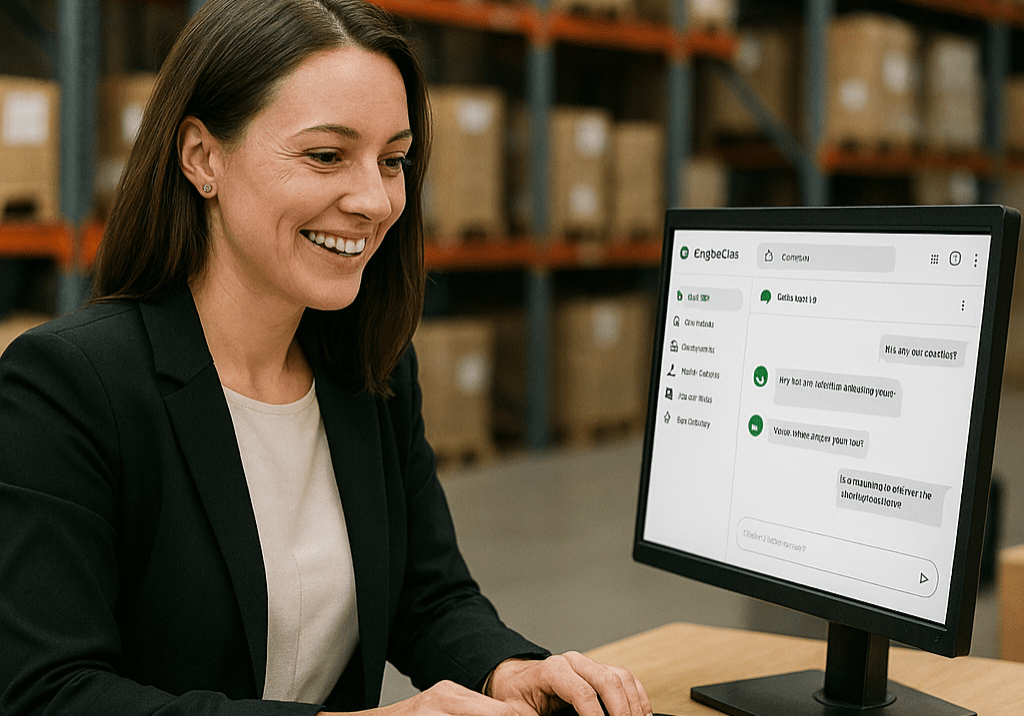
You should have a single point of contact, a real person with a name and a direct line, plus a dashboard that shows you exactly what is happening at any given moment. Order received, order picked, order dispatched, tracking number attached. Automated notifications flow to your customers with your branding, not the 3PL's logo, maintaining a professional front. White-label communication options let you control the tone and content of shipping updates, turning a functional notification into a brand touchpoint.
Proactive problem-solving separates the good providers from the merely adequate. If a book is damaged in transit, your 3PL should flag the issue and propose a resolution, a replacement copy dispatched, a refund processed, before the customer even thinks to complain. This level of service protects your reviews and your reputation. When customers receive timely, accurate updates and swift resolutions to problems, they trust you. Trust drives repeat purchases. Repeat purchases keep publishers alive.
Integration and Technology: Making Your Sales Channels Sing
Your 3PL should slot into your existing tech stack without requiring a degree in computer science. Direct integrations with Shopify, WooCommerce, BigCommerce, and Etsy are table stakes for UK booksellers. Amazon and eBay integrations pull orders from multiple marketplaces into a single fulfilment queue, so you never log into five different dashboards to check what needs shipping.
The live inventory promise is non-negotiable. When a customer buys the last copy of a title on your Shopify store, that deduction should reflect instantly on your eBay listing and your Amazon inventory. Overselling is not just embarrassing; it damages your seller metrics and can get you suspended from marketplaces. Real-time stock synchronisation across all channels prevents this entirely.
For publishers with more complex needs, API access allows custom integrations with print-on-demand workflows, bespoke ERP systems, or proprietary order management tools. If your business runs on a specific piece of software, your 3PL's technology should be flexible enough to talk to it.
The Cost Question: Is a 3PL Worth It for Small Publishers?
The pricing conversation makes many publishers nervous, largely because few 3PLs publish transparent rate cards. The typical model breaks down into three components: a storage fee (charged per pallet, per shelf, or per cubic metre per month), a pick and pack fee (a flat rate per order plus a small per-item charge), and the actual shipping cost (passed through at the 3PL's negotiated carrier rates).
The hidden savings are where the maths gets interesting. 3PLs secure shipping rates that small publishers simply cannot access on their own, often 20 to 40 percent below what you would pay at the Post Office counter. They buy packaging materials in bulk. They do not charge you for the hour you spent searching for a missing copy behind the sofa. And they do not make picking errors that cost you return postage and replacement stock.
For a standard paperback shipped within the UK, you are looking at a few pounds per order for pick, pack, and postage combined, often less than the cost of a single cup of coffee. The tipping point where a 3PL becomes cheaper than DIY fulfilment typically lands around 50 to 100 orders per month. Below that volume, your own labour may still be the most cost-effective option, though your sanity may disagree. Above that threshold, the economics tilt decisively in favour of outsourcing.
Conclusion: Stop Packing Boxes, Start Publishing Books
Outsourcing your fulfilment is not an admission of defeat. It is a strategic decision to focus on the work that only you can do: discovering authors, editing manuscripts, designing covers, and building a readership. A specialist book 3PL saves you time, reduces costly errors, and gives you the infrastructure to scale without hiring a warehouse team or converting your garage into a distribution centre.
CBF Fulfilment offers exactly this combination: UK-based storage with live inventory visibility, specialist book handling, Amazon FBA prep, subscription box management, and a commitment to communication transparency that keeps you informed at every stage. No black holes, no guesswork, no bent corners.
Your books deserve a better home than your spare room. Let us find them one. Ready to unlock your efficiency? Contact CBF Fulfilment today for a bespoke quote tailored to your book publishing needs.

Looking for a Reliable Fulfilment Partner?
Whether you're sending 1,000 items or managing ongoing fulfilment requirements, we're here to help.