FBA Preparation Guide 2026: Pack for Amazon UK Without Headaches
Getting your FBA preparation right is the difference between a smooth launch and a pallet sitting in the returns centre, accruing storage fees while you frantically Google what went wrong. This guide walks you through exactly how to pack your products to pass Amazon’s increasingly strict checks, avoid costly rejections, and decide whether to handle prep yourself or hand it off to a service like CBF Fulfilment. We will cover the specific compliance rules that trip up UK sellers most often, from the infamous 3-foot drop test to suffocation warnings and box size limits, plus the packaging options and branding decisions that affect your bottom line.
Table of Contents
- Why FBA Preparation Matters More Than You Think (Especially in 2026)
- The Official Amazon UK Checklist: 9 Prep Types You Must Know
- Box Sizes, Weight Limits & Pallet Etiquette (UK Edition)
- Branding on Packing – A Missed Opportunity or a Compliance Risk?
- DIY vs. Outsourcing Your FBA Preparation – The Real Cost Breakdown
- Common Reasons Amazon UK Rejects Your Shipment (And How to Avoid Them)
- Seasonal & Volume-Based Prep Tips for 2026
- Frequently Asked Questions About FBA Preparation (UK Sellers)
- Final Checklist – Your FBA Preparation Cheat Sheet for 2026
Why FBA Preparation Matters More Than You Think (Especially in 2026)
Amazon’s fulfilment centres have grown less forgiving with each passing year. In 2026, the algorithms that scan incoming inventory are sharper, and the human inspectors who back them up are under pressure to turn pallets around fast. A non-compliant shipment does not get a polite note asking you to try harder next time. It gets refused at the loading bay or, worse, accepted and then hit with “unplanned prep service” fees that can double your per-unit costs before you have sold a single item.

The real sting of a rejection is not the return shipping charge, though that hurts. It is the lost sales velocity. While your stock is in limbo, your listing drops in rank, your competitors fill the gap, and you are left explaining to your accountant why a profitable product suddenly looks like a charity project. Amazon’s 3-foot drop test sits at the heart of this. Your product will fall from a height that would make a toddler wince. Five times. On concrete. If it survives, Amazon lets it in. If it does not, you are liable for the damaged inventory and the cost of disposal. The lesson is simple: pack as if your parcel is about to have a very bad day, because it is.
The Official Amazon UK Checklist: 9 Prep Types You Must Know
Amazon’s Seller Central documentation lists nine distinct prep types, and while that sounds like corporate overkill, each one exists because a seller somewhere tried to cut a corner and created a warehouse disaster. The nine are: item labelling, bagging, bubble wrap, boxing, cap seal, opaque covering, set creation, suffocation warnings, and poly-bagging. You will not need all of them for every product, but you do need to know which ones apply to yours.
The three mistakes UK sellers make most often are missing suffocation warnings on poly bags, using the wrong barcode type (FNSKU versus manufacturer barcode), and failing the drop test because the packaging looked fine on the kitchen table but disintegrated on impact.
The 3-Foot Drop Test – Your Packaging’s Final Exam
The protocol is specific and repeatable. Your packaged product must survive five consecutive drops from three feet onto a concrete surface. The drops target the top, the bottom, the largest side, a bottom corner, and the longest bottom edge. This is not a theoretical exercise. Amazon will test your packaging, and if it cracks, splits, or exposes the product, you fail.
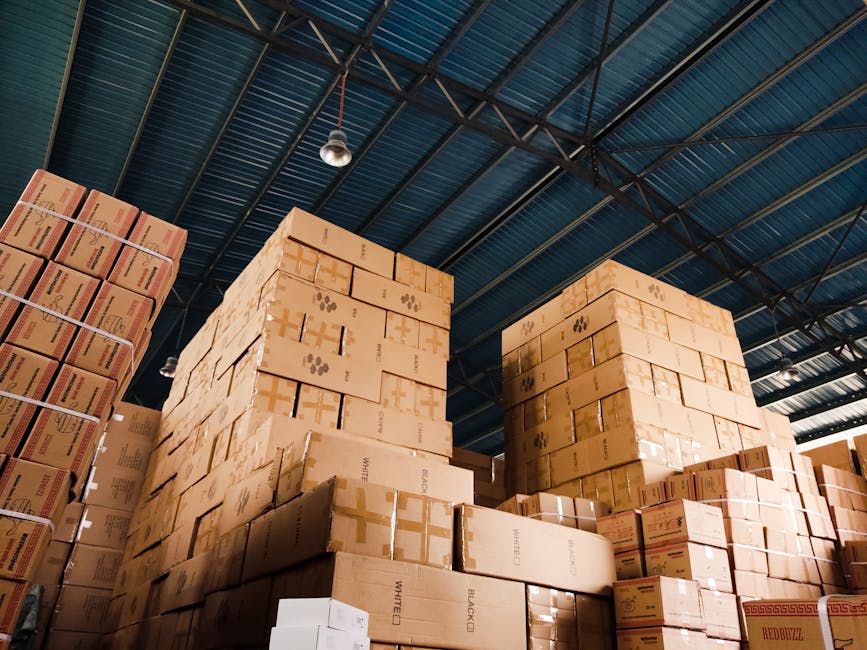
Do not guess whether your packaging passes. Buy a cheap concrete paving slab from B&Q, take it into the garden, and drop your product five times. If the box crumples or the contents shift enough to cause damage, you need more protection. A practical note for the UK market: our weather means warehouses are often damp, even in summer. Cardboard absorbs moisture and weakens. For anything heavy or fragile, use double-walled boxes. The extra 30 pence per box is cheaper than a rejected shipment.
Suffocation Warnings & Poly-Bagging Rules
Poly bags used in FBA preparation must be at least 1.5 mil thick and must carry the standard suffocation warning printed clearly in English. The warning text is not optional, and Amazon does check. Bags must also have a clear opening, meaning no tie closures or knotted ends, unless the bag contains a set of items sold as a single unit. The logic is safety: a child should be able to open the bag without struggling against a tight seal.
Yes, Amazon really does check if your bag has the right warning. Inspectors see thousands of units a day, and a missing suffocation label stands out like a typo on a CV. Print the warning directly onto the bag or use compliant pre-printed poly bags. Handwritten labels will not cut it.
FNSKU vs. Manufacturer Barcodes – The 50p Decision
When you create a listing, Amazon asks whether you want to use the manufacturer barcode or an Amazon barcode (FNSKU). Using the manufacturer barcode saves you approximately 50 pence per unit in labelling fees, because Amazon does not need to apply its own sticker. That saving adds up quickly if you are moving volume.
The trade-off is control. Manufacturer barcodes mean your inventory is commingled with other sellers offering the same product. If one of those sellers sends in counterfeit stock, and a customer receives a fake from the bin your inventory was mixed into, the complaint lands on your account. For new sellers, or anyone selling in a category where counterfeits are common, the 50 pence saving is false economy. Stick with FNSKU labelling. It ties every unit back to you and keeps your reputation in your own hands.
Box Sizes, Weight Limits & Pallet Etiquette (UK Edition)
Amazon UK imposes hard limits on box dimensions and weight. No side of any box may exceed 25 inches, which is 63.5 centimetres in measurements that make sense. The maximum weight per box is 50 pounds, or 22.7 kilograms. You are also limited to 150 units per case. Exceed any of these and the system flags your shipment before a human even sees it.
Pallet requirements are equally strict. The maximum pallet height for Amazon UK is 1.8 metres, and that measurement includes the pallet itself. Stack your boxes to 1.8 metres and you are over. Over-height pallets get turned away at the dock, and the lorry driver will not hang around while you restack. Use Euro pallets, which measure 800 by 1200 millimetres. US-style pallets are not accepted at UK fulfilment centres. Think of pallet building as Tetris, but with higher stakes and no music.
Branding on Packing – A Missed Opportunity or a Compliance Risk?
Amazon’s Ships in Product Packaging programme, known as SIPP, allows sellers to send products in their own branded packaging without an outer Amazon box. The customer receives the item exactly as you designed it, which is great for brand recognition. The catch is that SIPP requires certification, and the packaging must pass rigorous testing to prove it can survive transit without additional protection.
If you are not enrolled in SIPP, keep branding off the outer shipping box. Logos, marketing messages, or colourful designs on the exterior carton are treated by Amazon as over-packaging, and you may be charged for it. Use plain brown kraft boxes for your FBA shipments and save the branded experience for the product box inside. Your brand is important, but Amazon’s automated tape machine does not care about your logo. It cares about scanning a barcode and moving on.
DIY vs. Outsourcing Your FBA Preparation – The Real Cost Breakdown
Handling FBA preparation yourself gives you complete control over quality. For a seller moving 50 to 100 units a month, DIY is manageable. You can inspect each item, apply labels carefully, and pack boxes on your dining table while listening to a podcast. The maths changes somewhere around the 500-unit mark. At that volume, prep becomes a second job, and one that does not pay particularly well when you factor in the hours.
Outsourcing to a UK-based prep service like CBF Fulfilment shifts the burden. You pay per unit, typically between £1 and £3 depending on the complexity of the prep required, and in return you get speed, compliance assurance, and often free storage for the first couple of months. The hidden costs of DIY add up quickly: tape, boxes, printer ink, bubble wrap, and the value of your own labour. If you are spending ten hours a week packing boxes, what is that time worth if you redirected it toward product research or marketing?
Fulfilment Experts claims customers save an average of 30 percent on fulfilment costs when switching to their service. TheFbaPrep.com offers multi-language support for international sellers. CBF Fulfilment focuses on UK-based reliability with transparent pricing and a straightforward service that covers receiving, inspection, labelling, poly-bagging, bubble-wrapping, palletising, and direct shipping to Amazon UK.
What to Look for in a UK FBA Prep Service (2026 Checklist)
Not all prep services are equal, and the industry has a transparency problem. Most providers do not publish per-unit pricing on their websites, which makes comparison difficult. When evaluating a potential partner, ask these questions: Do they inspect incoming stock for damage before prepping? How do they handle FNSKU versus manufacturer barcode labelling? Can they poly-bag and bubble-wrap to Amazon’s exact specifications? Do they palletise and ship directly to Amazon UK, or do you need to arrange onward transport? Always request a detailed quote before committing. A reputable provider will give you a clear breakdown, not a vague estimate.
Common Reasons Amazon UK Rejects Your Shipment (And How to Avoid Them)
The top three reasons shipments get rejected are missing suffocation warnings, boxes that exceed weight or size limits, and products that are expired or too close to their expiry date. Amazon UK requires at least 90 days of remaining shelf life on consumable products, and they enforce this strictly. A product with 89 days left is not close enough; it is rejected.
A lesser-known strategy involves the ship-from address in your Send to Amazon workflow. Using your manufacturer’s address, rather than your home or office, can optimise which fulfilment centre Amazon assigns your inventory to. This can reduce shipping distances and get your stock into the right regional warehouse faster. Amazon does not reject you because they dislike you. They reject you because your box is 26 inches long. It is a machine. It does not care.
Seasonal & Volume-Based Prep Tips for 2026
The fourth quarter, from October through December, is when Amazon UK tightens its acceptance windows. Capacity fills up, and late shipments can miss the Christmas rush entirely. Book your prep slot four to six weeks before you need stock to arrive at the fulfilment centre. If you are sending 1,000 or more units in a single batch, a dedicated prep provider becomes essential to avoid bottlenecks. Also, submit your Send to Amazon workflow early in the day. Warehouse allocations can shift as capacity fills, and morning submissions tend to get better placement.
Frequently Asked Questions About FBA Preparation (UK Sellers)
Can I prep my own products? Yes, as long as you follow Amazon’s rules exactly. There is no requirement to use a third-party service.
What is the 3-foot drop test? It is a standardised test where your packaged product is dropped from three feet onto concrete from five different angles. If the packaging fails, your shipment is at risk.
How much does FBA prep cost in the UK? Typically between £1 and £3 per unit, depending on the complexity of the prep work needed.
Do I need to poly-bag everything? No. Poly-bagging is required only for items that are liquid, loose, have small parts, or could leak or separate during transit.
What happens if my shipment is rejected? Amazon will either return it to you at your cost or charge you unplanned prep service fees to fix the issues in-house. Both outcomes hurt your margins.
Final Checklist – Your FBA Preparation Cheat Sheet for 2026
All items labelled with FNSKU, or manufacturer barcode if you are certain commingling is safe for your category. Poly bags carry suffocation warnings where applicable. Boxes measure no more than 25 inches on any side and weigh no more than 50 pounds. Products pass the 3-foot drop test without damage. Ship-from address set to the manufacturer’s location where possible. Consider outsourcing if your monthly volume exceeds 200 units. Tick these boxes and your shipment stands a far better chance of gliding through Amazon’s intake process without drama, leaving you free to focus on selling rather than firefighting.

Looking for a Reliable Fulfilment Partner?
Whether you're sending 1,000 items or managing ongoing fulfilment requirements, we're here to help.