Royal Mail DDP 3PL Guide 2026: Why Outsource PDDP Fulfilment
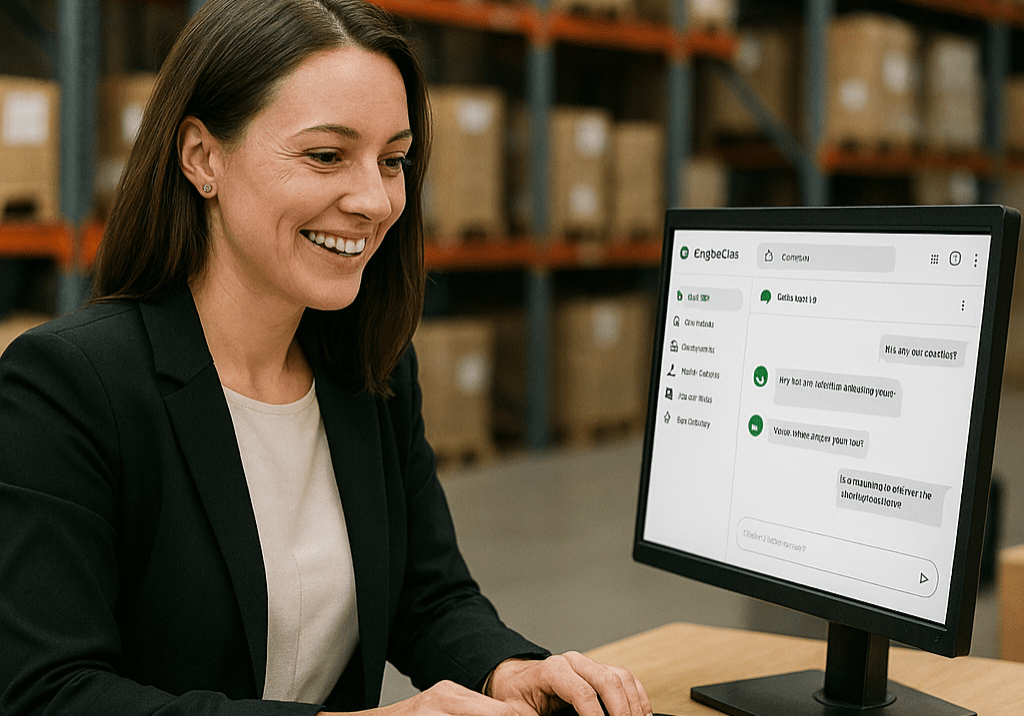
If you sell online from the UK, you know the particular dread that comes with international orders. Not the "will they like my product" anxiety, that fades after a few hundred five-star reviews. No, it is the customs dread. The 3 a.m. email from a customer in Frankfurt who has just been asked to pay €18 in VAT and a handling fee before the courier will release a parcel they already thought they had paid for. The refund request from someone in New York who "does not understand why there are extra charges." The parcel that sits in a Madrid depot for three weeks before limping back to your warehouse, battered and unsellable. This is the reality of Delivered Duties Unpaid shipping, and it has been bleeding e-commerce margins dry for years. Royal Mail's PDDP service was designed to fix this, but implementing it properly requires a level of technical integration and customs knowledge that most growing businesses simply do not have in-house. That is where a Royal Mail DDP 3pl partner like CBF Fulfilment changes the equation entirely. By the end of this guide, you will understand the difference between DDP and PDDP, the significant 2026 country expansions, the hidden risks of managing this yourself, and why outsourcing to a specialist is the only sane way to scale your international sales without losing sleep, money, or customers.
Table of Contents
- DDP vs. PDDP: The Acronym Soup Explained (Without the Jargon)
- The 2026 Royal Mail PDDP Update: New Countries and Key Changes
- The Hidden Risks of Managing PDDP In-House
- Why CBF Fulfilment Is Your Ideal Royal Mail DDP 3PL Partner
- How to Get Started with Royal Mail PDDP via CBF Fulfilment
- Frequently Asked Questions About Royal Mail DDP and 3PL Services
- The Smartest Move You Will Make in 2026
DDP vs. PDDP: The Acronym Soup Explained (Without the Jargon)
Let us clear up the terminology before we go any further, because Royal Mail has not made it easy. DDP stands for Delivery Duties Paid. It is an Incoterm, a legal principle that says the seller takes full responsibility for all shipping costs, duties, taxes, and customs clearance fees right up to the recipient's door. PDDP stands for Postal Delivered Duties Paid, and this is Royal Mail's specific product that makes the DDP principle work within the postal network. Think of DDP as the what and PDDP as the how. The outcome is identical: your customer receives their parcel without being asked for a single additional penny. No surprise VAT demands, no handling fees levied by the destination postal operator, no awkward "I refuse to pay" standoffs that leave you out of pocket for both the product and the return shipping.
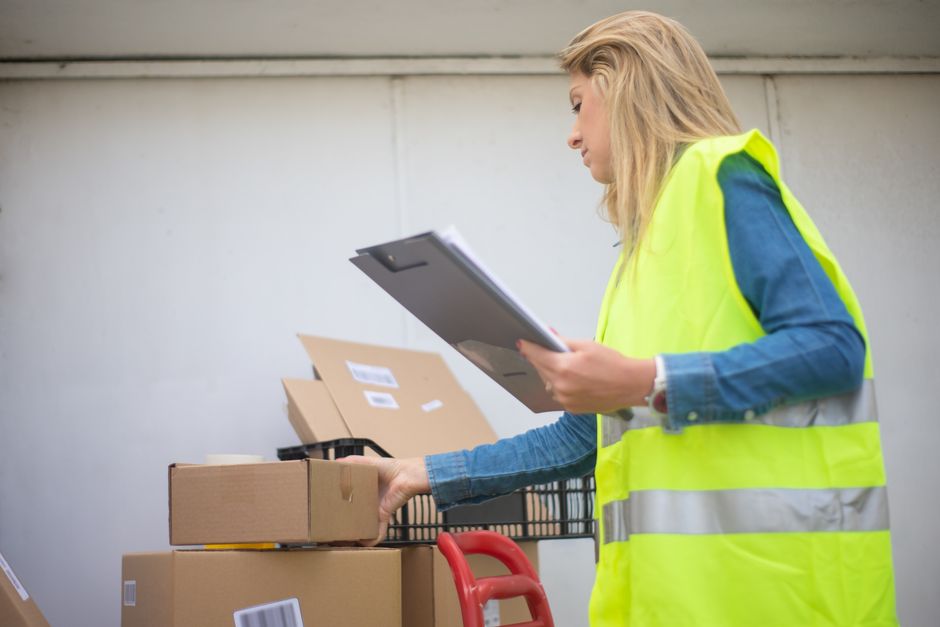
The old way, Delivered Duties Unpaid, deserves a moment of silence. Or perhaps a eulogy delivered with the dark humour it merits. DDU was the parcel hostage situation. Your customer's order would arrive in their country, the local customs authority would calculate the import charges, and the delivery driver would turn up demanding payment before handing over the goods. Customers felt ambushed. Some paid grudgingly and never ordered from you again. Others refused outright, leaving you with a return shipment, a refund to process, and a customs bill that did not simply disappear because the parcel changed direction. PDDP eliminates this theatre of disappointment entirely. The duties and taxes are calculated and paid upfront, the parcel clears customs faster because the paperwork is pre-settled, and the recipient experiences the same frictionless delivery they get from domestic orders. For UK e-commerce sellers, this is not a minor improvement, it is the difference between a sustainable international revenue stream and a customer service disaster waiting to happen. The catch, and there is always a catch, is that PDDP requires specific product codes, approved shipping platform integrations, and accurate electronic customs data for every single parcel. A 3PL like CBF Fulfilment automates all of this so you never have to think about MPR codes or commercial invoice line items again.
The 2026 Royal Mail PDDP Update: New Countries and Key Changes
The biggest news for UK sellers this year is the expansion of Royal Mail's PDDP service. From 1st July 2026, eight additional EU countries go live: Belgium, Bulgaria, Denmark, Estonia, Finland, Italy, Latvia, Slovakia, and Spain. This brings the total PDDP coverage to 22 destinations, including the United States, most existing EU member states, Switzerland, and Norway. If you have been holding off on marketing to customers in Rome or Copenhagen because the duties situation was too messy, that excuse expires this summer. The handling fees are refreshingly straightforward, which is not something anyone often says about postal pricing. For Ireland and the USA, the handling fee is just 50p per parcel. For the rest of the EU, it is £1.00. Switzerland comes in at £4.00, and Norway at £8.00. These are not punitive numbers, and they are predictable, which matters enormously when you are calculating your total landed costs and setting your international pricing strategy.
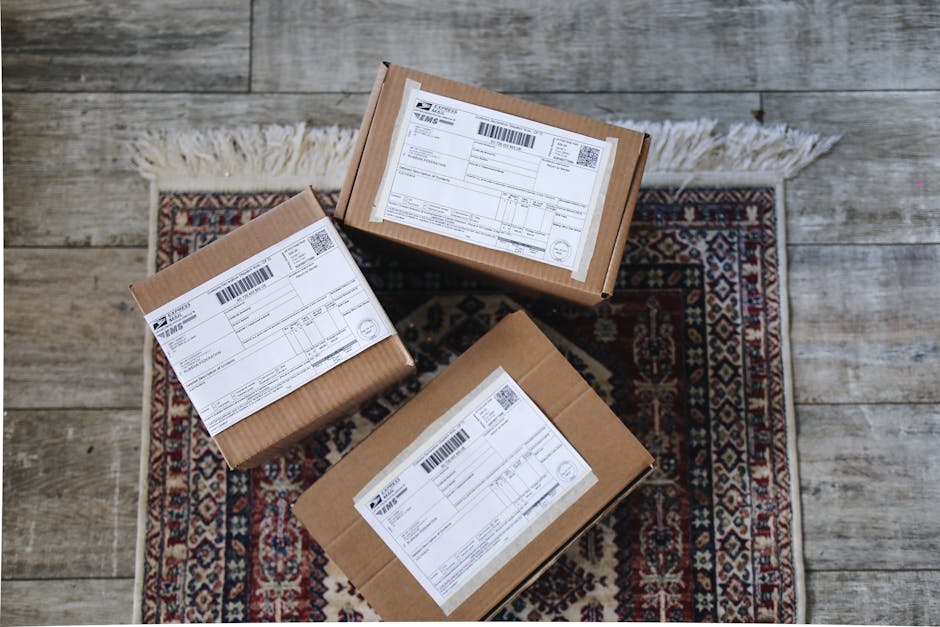
Now for the constraints you actually need to pay attention to. Royal Mail PDDP has a strict individual item weight limit of 2kg, rising to 5kg for books and pamphlets. The maximum parcel dimensions are 900mm when you add length, width, and height together, with no single side exceeding 600mm. If you sell cast iron cookware, weighted blankets, or chunky homeware, PDDP is not your solution, and you will need a carrier like DHL or FedEx for those heavier shipments. A competent 3PL will route your parcels to the most cost-effective carrier based on weight, dimensions, and destination, rather than forcing everything through one service. There is also a subtle trap lurking in the small print. Royal Mail states it accepts items of any value via PDDP, but individual destination countries have their own value limits and restrictions. Just because Royal Mail will take the parcel does not mean Italian customs will wave it through without additional scrutiny above a certain declared value threshold. These country-specific rules change periodically, and keeping track of them is exactly the kind of administrative burden that a fulfilment partner absorbs on your behalf.
The Hidden Risks of Managing PDDP In-House
On paper, setting up PDDP sounds manageable. You create an account with one of the 80-plus approved shipping platforms, you configure your product codes, you generate labels with the correct electronic customs data, and off you go. In practice, this is where the wheels come off for many sellers. Royal Mail mandates that PDDP items must be sent via an approved shipping solution only. The list includes ShipStation, Shiptheory, Sendcloud, Metapack, Zenstores, and dozens of others. If your current e-commerce platform or order management system does not integrate cleanly with one of these, you are facing either a painful migration or a manual data entry process that will eat hours of your week and introduce errors at scale. One wrong HS code, one misdeclared commodity description, one commercial invoice that does not match the electronic submission, and your carefully planned DDP shipment reverts to a DDU delivery. The parcel arrives, the customer gets asked for money, and you are right back in the hostage situation you were trying to escape.
Then there is the margin risk. When you ship PDDP, you are responsible for paying the destination country's duties and taxes. If you estimate these incorrectly at checkout, you absorb the difference. Underestimate by a few percentage points across a thousand orders, and you have quietly haemorrhaged profit without realising it until your accountant points out the discrepancy. A 3PL with an integrated duty calculator removes this guesswork. The system pulls the correct rates for the product category and destination country at the point of label generation, so you know your exact landed cost before the parcel leaves the warehouse. Returns add another layer of complexity that Royal Mail's own documentation handles with a degree of vagueness that borders on artistic. When a customer returns a PDDP shipment, the duties and taxes you paid upfront are theoretically refundable, minus the handling fee. The process for reclaiming those funds involves submitting evidence of re-export to HMRC and the destination tax authority, and it is not quick. A fulfilment partner that handles reverse logistics as standard will manage this reclaim process for you, rather than leaving you to chase tax authorities across multiple time zones. Managing PDDP yourself is like doing your own tax return, possible in theory, but you will probably end up crying into your spreadsheet at 11 p.m. on a Sunday.
Why CBF Fulfilment Is Your Ideal Royal Mail DDP 3PL Partner
CBF Fulfilment sits at the intersection of Royal Mail's technical requirements and your need for a service that simply works without constant supervision. We are fully integrated with the approved shipping platforms, which means your PDDP labels print automatically with the correct product codes, whether that is MPR for Tracked, DE6 for Untracked, or BZU for enhanced compensation shipments. You do not need to memorise Royal Mail's product code matrix or worry about whether you have selected the right service for a parcel going to Oslo versus one heading to Chicago. Our system handles that routing logic behind the scenes, applying the appropriate code and customs dataset for each destination.
Duty and tax accuracy is where a fulfilment partner either proves its worth or becomes an expensive liability. We calculate landed costs upfront using current destination-country rates, so the amount you charge at checkout matches what you will actually pay when the parcel clears customs. No surprise bills, no margin erosion, no awkward conversations with your finance director about why the international division is losing money on every shipment. Whether you send ten parcels a day or ten thousand, the customs paperwork scales without additional stress. Our team handles the commercial invoices, the electronic customs submissions, the tracking updates, and the physical carrier hand-offs to Royal Mail's network. Returns management is built into our service as standard. When a PDDP parcel comes back, we process the return, manage the inventory disposition, and handle the duty reclaim paperwork so you are not left chasing HMRC for a refund on VAT you paid six weeks ago. We are UK-based, we understand the Royal Mail ecosystem from sorting centre to final mile, and we treat your parcels with the same care we would give our own stock. That is not marketing fluff; it is the baseline expectation for any 3PL worth its warehouse lease.
How to Get Started with Royal Mail PDDP via CBF Fulfilment
The transition to duties-paid shipping does not need to be a monumental project. Start by auditing your current international sales data. Which countries do you ship to most frequently, and which of those are now covered by the PDDP expansion? If you have a concentration of customers in Spain or Italy, the July 2026 launch should be your trigger to move now, before your competitors catch on. Next, check your product catalogue against the weight and dimension limits. Items under 2kg are ideal for PDDP. Heavier products will need an alternative carrier, and we can advise on the most cost-effective routing for those shipments as part of a blended fulfilment strategy.
Once we understand your product range and destination mix, our team sets up your shipping profiles with the correct DDP and PDDP product codes, configures the duty calculation parameters, and tests the label generation workflow end to end. You then update your checkout messaging to include "Duties and Taxes Included" for the relevant countries. This is not a cosmetic change. Displaying that phrase at checkout has a measurable impact on conversion rates because it removes the uncertainty that causes international shoppers to abandon their carts. From that point forward, orders flow into our system, we pick, pack, label, and dispatch, and your customers receive their parcels without a single additional charge. Stop wrestling with customs forms and HS code lookups at midnight. Get a quote from our team today, and let us handle the operational complexity while you focus on growing your brand.
Frequently Asked Questions About Royal Mail DDP and 3PL Services
What is the actual difference between DDP and PDDP? DDP is the Incoterm that defines the seller's obligation to pay all duties, taxes, and clearance fees. PDDP is Royal Mail's postal product that executes on that obligation within their network. You need both the legal framework and the operational service, and a 3PL ensures they work together.
Do I need IOSS to use Royal Mail PDDP? For EU shipments valued under €150, yes, you need an Import One-Stop Shop registration to handle VAT collection and remittance. We set this up as part of your fulfilment configuration, so you do not need to navigate the IOSS portal yourself.
Can I use PDDP for B2B shipments? Technically yes, but business-to-business shipments often require a full commercial invoice with different data fields than consumer parcels, and the VAT treatment may differ depending on the buyer's registration status. A 3PL is far better suited to handling B2B customs requirements than a DIY approach.
What happens if a PDDP parcel is returned by the customer? The sender is entitled to a refund of the duties and taxes paid, minus the handling fee charged by Royal Mail. The reclaim process requires proof of re-export, and we manage this on your behalf so you recover your funds without dedicating internal resource to the paperwork chase.
Is PDDP cheaper than using DHL or FedEx for international shipments? For small, lightweight items under 2kg, Royal Mail PDDP is typically the most cost-effective option, particularly for destinations like the USA and Ireland where the handling fee is just 50p. For heavier parcels or shipments requiring faster transit times, DHL or FedEx may offer better value. We advise on the optimal carrier for each parcel based on weight, dimensions, destination, and delivery speed requirements, rather than forcing every shipment through a single service.
The Smartest Move You Will Make in 2026
Royal Mail's PDDP service is a genuinely useful tool for UK e-commerce sellers who want to grow their international customer base without the friction and reputation damage of surprise customs charges. But it is not a set-and-forget solution. The product codes, the platform integrations, the country-specific value limits, the duty calculations, and the returns reclaim process all demand ongoing attention and expertise. Your time is better spent on product development, marketing, and customer experience, not arguing with a customs officer in Madrid about a missing HS code on a commercial invoice. Let CBF Fulfilment be your Royal Mail DDP 3pl partner. We handle the operational complexity, you reap the revenue growth. Contact us for a free consultation and see how much time, money, and mental bandwidth you can reclaim by outsourcing your international fulfilment to a team that lives and breathes this stuff every single day.

Looking for a Reliable Fulfilment Partner?
Whether you're sending 1,000 items or managing ongoing fulfilment requirements, we're here to help.