
Subscription 3PL Guide 2026: Choose a Partner That Won’t Let You Down
If you are scaling a subscription brand in 2026, finding the right subscription 3PL isn’t just about shipping, it’s about protecting your recurring revenue. The UK subscription economy has matured into a multi-billion-pound machine, and with that growth comes a brutal sorting of winners and losers. The losers are the brands whose boxes arrive late, wrong, or looking like they were drop-kicked from the depot. The winners are the ones whose subscribers never think about logistics at all. That silence is expensive to buy, and it starts with choosing a fulfilment partner who understands that a monthly box isn’t a parcel, it’s a promise wrapped in cardboard. This guide walks you through what to look for, what to avoid, and how to sound like you know what you’re doing when you pick up the phone.
Table of Contents
- Why 2026 Is the Year Your Subscription Box Needs a Dedicated 3PL
- The Subscription Fulfilment Process: More Than Just Pick and Pack
- What to Look for in a Subscription 3PL: The 2026 Checklist
- The Hidden Costs of a Bad 3PL: A Professional Humour Break
- Comparing the Options: In-House vs. 3PL vs. Hybrid
- How to Start the Conversation with a 3PL Without Sounding Like a Novice
- The Bottom Line: Your Subscription 3PL Is Your Silent Business Partner
Why 2026 Is the Year Your Subscription Box Needs a Dedicated 3PL
The global subscription box market is projected to hit $53.63 billion this year, and the UK is carrying a hefty share of that weight. For a small brand, that sounds like a champagne problem. For an operations manager staring at a living room buried in bubble wrap, it feels more like a hostage situation. In-house fulfilment works beautifully until it doesn’t, and the breaking point arrives faster than most founders expect. One month you are handwriting thank-you notes; the next you are renting a van at 6 a.m. because the courier didn’t show.
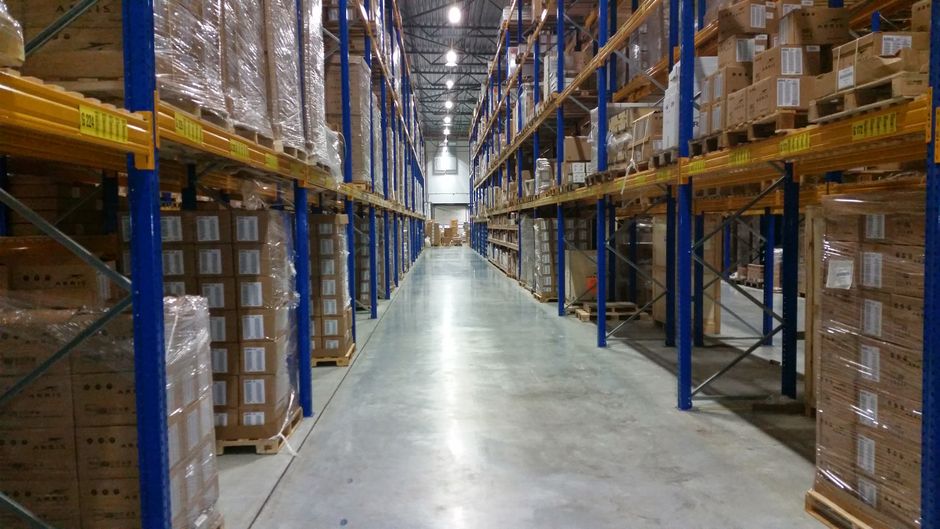
The structural challenge is the 48-hour crunch. Standard ecommerce trickles out a few hundred orders a day. Subscription brands ship thousands of identical orders in a single, merciless window. A warehouse set up for daily drip fulfilment collapses under the weight of a batch drop. Pallets stack up, pickers burn out, and error rates spike. That leads directly to the churn statistics nobody talks about. We know 68 percent of subscription churn is involuntary, failed payments and expired cards. But a further 15 percent of monthly cancellations are caused by late deliveries or kitting errors. These are self-inflicted wounds. A dedicated subscription 3PL exists to stop you from bleeding subscribers you could have kept.
Your subscriber doesn’t care that your co-packer called in sick. They just care that their Gin of the Month arrived looking like it went ten rounds with a postman. In 2026, patience is a vintage commodity, and your customers didn’t sign up for it.
The Subscription Fulfilment Process: More Than Just Pick and Pack
Batch vs. Drip Fulfilment: Know Your Rhythm
There are two ways to run a subscription operation, and your 3PL needs to be fluent in both. Batch fulfilment means every box ships in the same tight window, often the first week of the month. This requires palletised staging, dedicated packing lines, and a workforce that can scale up and down without losing accuracy. Drip fulfilment spreads shipments across the month based on sign-up date, which looks more like standard ecommerce but still demands recurring consistency.
A subscription 3PL must be built for batch shipping. The ones that only do standard ecommerce will nod along during the sales call and then panic when you drop 3,000 orders on them in a single morning. Ask them directly: what was your largest single-day batch drop last month. If they hesitate, you have your answer.
Kitting, BBDs, and the Art of the Unboxing

Kitting is where subscription fulfilment separates itself from the pick-and-pack crowd. A subscription box isn’t a single SKU pulled from a shelf. It’s a bill of materials: one candle, two stickers, one custom insert, one tissue paper wrap, one thank-you card. The 3PL must assemble these components in the correct sequence, in the correct orientation, every single time. This is high-touch work that rewards obsessive process.
BBD and batch controls are non-negotiable if you deal in food, beauty, or anything perishable. The 3PL must operate on FEFO logic, First Expiry, First Out, rotating stock so the short-dated product ships first. They must also quarantine batches when a quality issue arises, pulling affected inventory before it reaches a subscriber. A warehouse that treats your snack bars the same way it treats a t-shirt is a liability.
Packaging management is the silent killer of brand experience. Branded boxes, custom inserts, and tissue paper are not general inventory. They must be stored separately, picked accurately, and assembled without creases or smudges. A good 3PL treats your packaging like a component, not an afterthought.
Then there is the image baseline. Before any 3PL builds 5,000 boxes, they should build five and photograph them. Set the baseline with photos. If the 3PL cannot send you a picture of a perfect box, they will not build 5,000 of them perfectly. This is not a nice-to-have. This is your quality control anchor for the entire campaign.
Lead Times and the Last-Minute Panic
Realistic lead times keep you sane. Kitting typically requires three to five days before the shipping window opens. Shipping itself takes one to two days domestically, longer for international. A competent 3PL will force you to lock your SKU list seven days out. This feels restrictive the first time. By month three, you will recognise it as the only thing standing between you and a 2 a.m. email chain about a missing insert. The discipline is the service.
What to Look for in a Subscription 3PL: The 2026 Checklist
WMS Integration: No More Spreadsheet Chaos
The warehouse management system is the brain of the operation, and you need one that speaks your language. Native integration with Shopify, Recharge, or your subscription platform is the baseline. Real-time inventory sync is non-negotiable. If you cannot see your stock levels from your phone, you are flying blind.
Beyond basic integration, look for a WMS that handles kitting bills of materials. The system must know that a single box consumes one candle, two stickers, and one insert, and it must deduct those components from inventory the moment the box is assembled. Without this, you are running a guessing game with your own stock.
Communication and the Image Baseline Protocol
Most 3PLs are terrible at proactive communication. They ship the boxes and send the tracking numbers, and that is where the conversation ends. Demand more. A daily photo of the first box off the line costs them thirty seconds and gives you proof of quality. Set service level agreements for error reporting: notify me within two hours of a BBD discrepancy, within one hour of a packaging defect. If the 3PL resists this, they are hiding from accountability.
Scalability for the 2026 Peak
December comes for every subscription brand. Your 3PL must handle a 300 percent volume spike without collapsing. Ask how they staff for peak. If the answer is we hire temps, dig deeper. Temps who do not know your product are the source of most kitting errors. The better 3PLs cross-train permanent staff throughout the year and supplement with temps only for the simplest tasks.
Ask about carrier contingency plans. Royal Mail strikes, Evri backlogs, DPD capacity caps: these are not hypotheticals in the UK. A good 3PL has relationships with multiple carriers and can reroute volume when one network seizes up. If they are single-carrier dependent, you are one industrial dispute away from a very quiet month.
UK-Specific Logistics: Brexit and Carriers
This is the gap most generic 3PL content ignores. If you ship to Northern Ireland or the EU, your 3PL must handle customs documentation and EORI numbers. Brexit did not go away; it just became someone else’s paperwork problem. Make sure that someone is not you.
The carrier mix matters for domestic shipments too. DPD offers speed and reliability for urban deliveries. Royal Mail reaches rural addresses that couriers charge a premium for. Evri provides cost-effective options for lower-value boxes. A UK 3PL that only offers one carrier is not serving your subscribers, it is serving its own convenience.
The Hidden Costs of a Bad 3PL: A Professional Humour Break
Let us talk about the ways a bad 3PL costs you money, because the invoice is never the full story.
The Wrong Insert Tax is a classic. The 3PL puts the June insert in the July box, and suddenly 500 subscribers know about last month’s promotion. You now have 500 angry emails and a PR problem that costs far more than the fulfilment fee you saved.
The Mystery Weight Fee is a slow bleed. The 3PL uses a box that is two centimetres too big, dimensional weight pricing kicks in, and your shipping costs double. Across 2,000 orders, that is real money vanishing into corrugated cardboard.
The Where Is My Box Game is the fastest way to lose subscribers. The tracking number does not update for 48 hours, your DMs explode, and your customer service team starts updating their CVs. Silence is not golden; it is churn.
And then there is BBD Roulette. The customer receives a box of snacks that expire next Tuesday. Nothing says we value you like a protein bar that’s older than your subscription. The refund costs you the order. The social media post costs you ten future orders.
Comparing the Options: In-House vs. 3PL vs. Hybrid
In-house fulfilment works for fifty orders a month. It breaks at five hundred. Your living room is not a warehouse, and your partner is not a picker. The romance of packing boxes yourself fades around the time you realise you have not left the house in three days.
Full 3PL outsourcing is the sweet spot for brands shipping five hundred to five thousand plus orders a month. It requires trust, clear standard operating procedures, and a willingness to let go. The brands that struggle are the ones that want to outsource the labour but keep control of every micro-decision. That is not outsourcing; that is hiring an extension of your anxiety.
The hybrid model works for some. Kitting in-house, shipping via 3PL. You control the unboxing experience, the 3PL handles the carrier relationships and the midnight drop-offs. This suits brands with highly custom packaging or founders who genuinely enjoy the assembly process. Just know that it caps your growth at the point where your kitting capacity runs out.
In the UK, most subscription brands hit the 3PL tipping point at around three hundred to four hundred monthly subscribers. Below that, a good operations manager can hold it together. Above that, you are one flu season away from a missed shipping window.
How to Start the Conversation with a 3PL Without Sounding Like a Novice
The sales call is a test, and you are the one administering it. Walk in with specific questions and watch how they respond.
Ask what their error rate is on kitted boxes. A good 3PL knows this number to one decimal place. A bad one says it never happens.
Ask if they can handle batch drops of two thousand plus units in a single day. If they say yes, ask for a client reference who ships at that volume. Call the reference.
Ask how they manage BBDs and batch recalls. Listen for FEFO, quarantine zones, and lot tracking. If they talk in generalities, they have never handled a recall, and you do not want to be their first.
Ask if they can send you a photo of the first five boxes built. If they hesitate, they do not have a quality control process you can trust.
Red flags are easy to spot once you know what to look for. They cannot name their WMS. They say we treat every box the same, which means they do not understand subscription fulfilment. They do not ask about your packaging dimensions, which means they have not thought about shipping costs.
Request a trial run of fifty boxes before signing a contract. It will cost you a few hundred pounds and save you thousands in mistakes. A 3PL that refuses a trial is not confident in its own performance.
The Bottom Line: Your Subscription 3PL Is Your Silent Business Partner
The right 3PL reduces churn, protects your brand, and handles the chaos of batch shipping so you can focus on growing the business. The wrong one becomes a second job you pay for. If you are planning your 2026 growth, start vetting your subscription 3PL now. The good ones book capacity months in advance, and the best ones will challenge your assumptions about how your operation should run. Your subscribers will never know how hard you worked to get that box right. That is the point.

Looking for a Reliable Fulfilment Partner?
Whether you're sending 1,000 items or managing ongoing fulfilment requirements, we're here to help.