
UK International Courier Options 3PL: Compare Carriers in 2026
Comparing international courier rates feels a bit like trying to solve a Rubik’s Cube while blindfolded. We’ve all been there. You stare at four different rate cards, each with its own surcharge structure, dimensional weight formula, and zone map, and you wonder why you didn’t just open a local shop instead. If you’re an e-commerce brand looking at UK international courier options 3PL partnerships are often the missing link between chaotic shipping and scalable growth. By the end of this guide, you will have a clear, no-nonsense framework for comparing international courier services and understanding how a fulfilment partner like CBF Fulfilment simplifies that choice entirely.
Table of Contents
- The Great British Carrier Smackdown – Who Does What Best?
- The Hidden Tax – A Breakdown of International Surcharges (2026 Edition)
- Europe vs. Rest of World – Which Carrier for Which Zone?
- Why a 3PL (Like CBF Fulfilment) Beats Managing Carriers Directly
- WMS Integration – The Glue That Holds It All Together
- How to Compare UK International Courier Options 3PL Partners (Your 5-Point Checklist)
- The Bottom Line – Stop Comparing Carriers, Start Comparing 3PLs
The Great British Carrier Smackdown – Who Does What Best?
No single carrier wins every route. The trick is knowing which network each one actually owns and operates, rather than subcontracting to a third party you have never heard of. Here is how the four main carrier groups available to UK sellers stack up when the parcels cross a border.
Royal Mail and its parcel arm Parcelforce remain the go-to for lightweight shipments under 2kg heading into Europe. Their strength lies in last-mile delivery, handed off to national postal operators with established trust in countries like France, Germany, and the Netherlands. Tracking on economy services can be patchy, and compensation limits are lower than the express carriers, but for low-value e-commerce goods the price point is hard to beat.
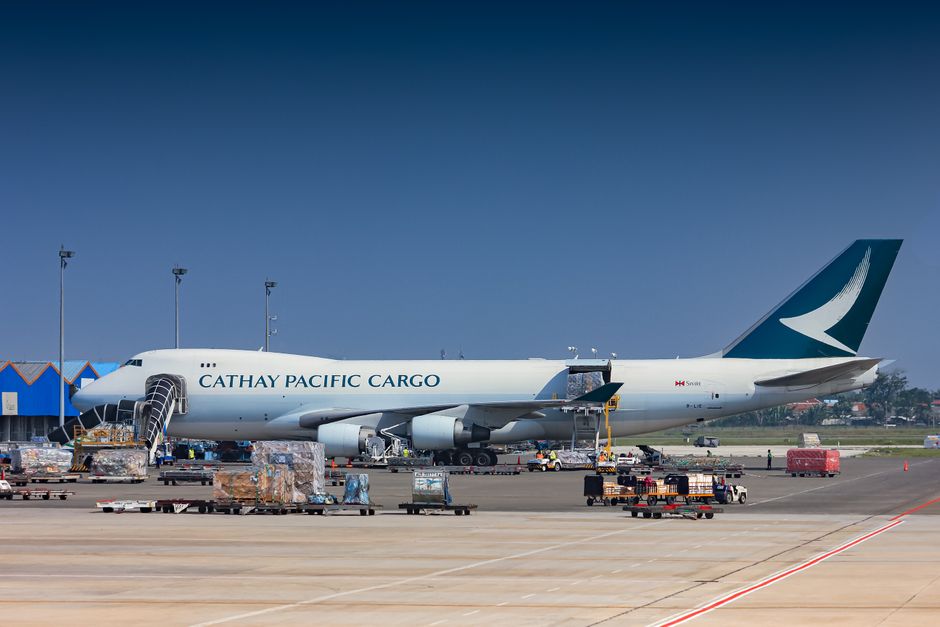
DHL Express is the gold standard for speed to the Rest of World, particularly the USA, Asia, and Australia. Their owned-airline model means parcels move through DHL hubs rather than commercial airline cargo holds, giving them control over transit times that competitors struggle to match. The tracking is excellent, the proof-of-delivery documentation is robust, and the pricing reflects all of that. If you are shipping high-value goods or time-sensitive B2B orders, DHL is usually the answer.
UPS dominates the heavy parcel segment, especially anything over 10kg heading to North America. Their ground network in the United States is unrivalled, and they have invested heavily in European road freight since Brexit. The catch is surcharges. UPS rate cards are famously surcharge-heavy, and if you do not understand the fine print on residential delivery fees or extended area surcharges, your invoice will deliver a nasty surprise.
FedEx often gets overlooked by smaller e-commerce brands, which is a mistake if you are shipping to Asia or the Middle East. Their hub-and-spoke model through Memphis and Guangzhou gives them a time-definite advantage on routes where DHL pricing is at its most aggressive. For UK sellers targeting Japan, South Korea, or the UAE, FedEx deserves a seat at the table.
The reality check is this: managing four separate carrier accounts, four sets of rate cards, four different cut-off times, and four different claims processes is a full-time job. Before you have even packed a single order, you are drowning in admin. This is precisely where the 3PL value proposition starts to make sense.
The Hidden Tax – A Breakdown of International Surcharges (2026 Edition)
Most merchants compare carriers by looking at the base rate. That is like judging a restaurant by the price of the starter and ignoring the service charge, the cover fee, and the bottle of water they put on the table without asking. The surcharges are where profit margins go to die.
Fuel surcharge is the big one, and it fluctuates monthly. In 2026, most carriers are applying fuel surcharges averaging 15 to 20 percent of the base rate, indexed against aviation fuel or diesel benchmarks. The percentage changes before you have had time to update your pricing spreadsheet, and if you are not watching it, you will undercharge your customers without realising.
Remote area surcharges catch out sellers who do not check postcode lists. Shipping to the Scottish Highlands, the Channel Islands, rural Norway, or certain Italian islands can trigger an uplift of £10 to £30 per parcel. The carrier defines what counts as remote, not you, and their definition is not always intuitive.

Large parcel and dimensional weight surcharges punish the box that is big but light. If your product is a pillow or a lampshade, the volumetric weight calculation means you pay for the space the parcel occupies, not its actual mass. Carriers apply a divisor, typically 5000 for international express shipments, and if your box dimensions multiplied together divided by that number exceed the physical weight, you pay the higher figure.
Saturday delivery and pre-10am services can double the cost of a standard international shipment. These are premium add-ons that carriers price aggressively because they know the sender is under pressure. If your customer needs a part before the weekend or a document before a meeting, you pay whatever the carrier demands.
Customs clearance fees deserve their own paragraph, especially for Delivered Duty Paid shipments to the EU post-Brexit. Carriers charge a disbursement fee for advancing the duties and taxes on your behalf, typically £12 to £15 per shipment or a percentage of the duty paid. Multiply that across hundreds of orders and the annual cost is substantial.
A 3PL aggregates shipping volume across multiple clients, which means they negotiate lower surcharge caps than an individual seller can achieve alone. When you are one of thousands of shippers in a consolidated account, the carrier is more willing to cap the fuel surcharge or waive certain residential delivery fees. That leverage is not available to a business shipping 50 parcels a week on its own account.
Europe vs. Rest of World – Which Carrier for Which Zone?
The decision tree splits at the English Channel. Shipping to Europe and shipping to the Rest of World involve different paperwork, different carrier strengths, and different customer expectations around delivery speed and cost.
Shipping to Europe (Post-Brexit Reality)
Customs paperwork is now mandatory for all EU shipments, regardless of value. The days of slapping a stamp on a jiffy bag and calling it done are over. Every parcel needs a CN22 or CN23 customs declaration, an HS code for the goods, and a clear statement of origin. Get it wrong and your parcel sits in a warehouse in Calais while your customer sends increasingly terse emails.
DHL Express is the fastest option for Europe, often delivering within one to two working days, but the cost reflects that speed. Parcelforce offers the best value for heavier parcels, particularly to France, Germany, and Spain, where their partnership with GLS provides reliable road-based delivery at a fraction of the air express price. Royal Mail remains the sensible choice for small letters, samples, and low-value items under 2kg, where the tracked and signed service provides enough visibility without breaking the bank.
The IOSS scheme is the detail that trips up sellers who have not done their homework. The Import One-Stop Shop allows UK sellers to collect VAT at the point of sale and remit it to EU tax authorities, so the customer does not get charged VAT again on import. Without IOSS registration, your customer pays VAT twice, plus a carrier handling fee for the privilege. That is a fast way to lose repeat business. CBF Fulfilment handles customs documentation and IOSS compliance automatically via WMS integration, so the correct paperwork prints with the shipping label and the customer sees no surprise charges.
Shipping to the Rest of the World (USA, Canada, Australia, Asia)
The United States is the largest export market for most UK e-commerce brands, and UPS and FedEx dominate for speed. Their domestic ground networks mean a parcel handed over at Heathrow can be on a truck in Chicago the next day. DHL is particularly strong for East Coast destinations, where their hub at JFK provides next-day delivery to New York, Boston, and Washington DC.
Australia and New Zealand favour DHL for reliability, though the transit time is rarely less than three to four working days regardless of carrier. Royal Mail economy is slow but cheap, often taking two to three weeks, which works for customers who prioritise cost over speed but requires clear expectation-setting at checkout.
Asia presents a different picture. FedEx and DHL have the best hub networks into Japan, China, Singapore, and South Korea, with FedEx routing through Guangzhou and DHL through Hong Kong. UPS is competitive on the outbound leg from the UK but can be slower on final mile in certain Asian countries where their local partnerships are less developed than DHL’s.
The 3PL advantage in all of this is the multi-carrier routing engine. A good fulfilment partner runs a software layer that checks carrier APIs at the point of label creation and selects the cheapest or fastest option based on the destination postcode, parcel weight, and dimensions. You do not need to know that DHL is cheaper than UPS for a 3kg box to Sydney this week. The system knows, and it makes the call automatically.
Why a 3PL (Like CBF Fulfilment) Beats Managing Carriers Directly
Managing four carrier accounts is like juggling flaming torches. We prefer to just hand you the marshmallows.
The volume discount argument is straightforward. CBF Fulfilment has shipped over one billion items since 2006 to more than 190 countries. That scale translates into rate cards that an individual merchant simply cannot access. Carriers want volume, and they price accordingly. When your 3PL negotiates on behalf of hundreds of clients rather than one, the per-parcel saving is measurable from day one.
The operational argument is equally compelling. We offer same-day dispatch up to 9pm, which means orders placed by your customers at 8pm still ship that night. If you are managing your own warehouse, your cut-off is whenever your last picker goes home. Missing the carrier collection window means a full day of delay, and in e-commerce, a day feels like a week to an anxious customer. Our 99.9 percent on-time dispatch rate is not a marketing claim. It is a systemised outcome.
The administrative argument might be the most persuasive of all. One invoice, one support team, one system. Not four carrier portals with four different password policies and four different ways of generating a commercial invoice. When something goes wrong, and in international shipping something always goes wrong eventually, you have a single point of contact who knows your account and can resolve disputes without you spending an afternoon on hold.
Dispute resolution deserves special mention. Our Hawkeye digital recording system captures footage of every single order as it is packed and dispatched. When a customer claims an item was missing or damaged, we can produce timestamped video evidence of exactly what went into the box and in what condition. That ends the “it didn’t arrive” argument before it starts, and it protects your seller metrics on platforms where chargebacks and claims can suspend your account.
WMS Integration – The Glue That Holds It All Together
A Warehouse Management System is the invisible infrastructure that makes international shipping feel effortless, even when the reality behind the scenes is anything but.
Real-time rate shopping is the headline feature. At the moment a shipping label is generated, the WMS pings the APIs of every carrier in the routing table and returns the cheapest option for that specific destination, weight, and service level. The decision takes milliseconds. The saving compounds across thousands of orders.
Automated customs forms eliminate the manual data entry that bogs down in-house fulfilment teams. The WMS pulls product HS codes, country of origin, and declared values directly from your inventory master data. When the label prints, the commercial invoice prints alongside it, pre-populated and compliant. No copying and pasting from a spreadsheet at 10pm.
Multi-channel sync ties it all together. Whether you sell on Shopify, Amazon, eBay, Etsy, or all four simultaneously, one inventory pool feeds one set of shipping rules. An order from any channel triggers the same routing logic, the same carrier selection, and the same documentation. CBF Fulfilment integrates with all major platforms and offers a custom API for bespoke setups. No lock-in, no proprietary software you cannot escape, no nonsense.
How to Compare UK International Courier Options 3PL Partners (Your 5-Point Checklist)
When you sit down to evaluate potential fulfilment partners, these five questions will separate the operators who understand international shipping from those who just own a warehouse.
1. Check the Surcharge Policy
Ask directly: what is your fuel surcharge cap? Do you charge for residential delivery in Germany? What is the remote area surcharge for Norway? A transparent 3PL will have these answers documented and will not hide behind vague assurances about “competitive rates.” If they cannot produce a surcharge schedule, walk away.
2. Look at the Cut-Off Times
A 3PL that offers same-day dispatch up to 9pm, as CBF Fulfilment does, extends your selling window by several hours. For brands with evening traffic spikes, particularly on social media, that difference translates directly into faster delivery promises and higher conversion rates. Ask about weekend operations too. International carriers move on Saturdays, and your fulfilment partner should as well.
3. Verify Compliance (HMRC FHDDS)
The Fulfilment House Due Diligence Scheme is an HMRC registration requirement for any UK business that stores goods on behalf of overseas sellers. We are FHDDS licensed. Many 3PLs are not, either through ignorance or avoidance. If you are selling into the UK from overseas, using an unregistered fulfilment house exposes you to joint liability for unpaid VAT. This is not a box-ticking exercise. It is a legal obligation with teeth.
4. Ask About Returns Handling
International returns are expensive, and the cost of shipping a return from California to Manchester often exceeds the value of the product. Does your 3PL offer a local returns address in the destination country? Can they consolidate returns and ship them back in bulk? A partner with a returns strategy saves you more money than one with a slightly lower pick-and-pack rate.
5. Test the Integration
Can they connect to your WMS or e-commerce platform without a six-month IT project? Ask for a sandbox environment or a reference call with a client on your platform. The integration should be measured in days, not months, and the 3PL should have a dedicated onboarding team who speak both logistics and technology. If their technical contact cannot explain how the API handles HS code mapping, they are not ready for your business.
The Bottom Line – Stop Comparing Carriers, Start Comparing 3PLs
The best UK international courier option is not a single carrier. It is a 3PL partner who manages all of them for you, applies the volume discounts you cannot access, handles the surcharge negotiations you do not have time for, and provides the technology layer that makes international shipping feel as simple as domestic.
At CBF Fulfilment, we do not just store boxes. We optimise your international shipping strategy, manage the customs compliance, and get your orders out the door with 99.98 percent accuracy. Our HMRC FHDDS accreditation, Hawkeye dispatch recording, and 9pm same-day cut-off are not marketing bullet points. They are the operational backbone that lets our clients stop thinking about logistics and start thinking about growth.
So, stop trying to become a shipping expert. Leave that to us. You have got a business to run.

Looking for a Reliable Fulfilment Partner?
Whether you're sending 1,000 items or managing ongoing fulfilment requirements, we're here to help.