AI Ecommerce Store Conversions: From 1.9% to 12% in 2026
You have built a beautiful store. You have paid for the ads. The product photography cost more than your first car, and the copywriter charged by the syllable. And yet, 98 out of every 100 visitors treat your site like a museum: they look, they wander, they leave without buying. You are essentially running a publicly funded art gallery, except nobody subsidises your overheads.
Table of Contents
- The £200 Billion Elephant in the Room: Why Your Store is Leaking Money
- The AI Toolbox: 5 Weapons That Actually Move the Needle
- The 3PL Connection: Why Your Fulfilment Partner is Your Secret AI Weapon
- Seasonal AI Campaigns: How to Not Panic in Q4 2026
- Your 12-Month AI Battle Plan (2026)
- The Ethical Bit: GDPR, Data Privacy, and Not Creeping Out Your Customers
- Ready to Stop Losing 98% of Your Visitors?
This is not a motivational speech about hustling harder. It is a practical, slightly cynical battle plan for 2026. The global average ecommerce conversion rate sits at a miserable 1.9%. The top ten percent of stores convert at 4.7% and above. The gap between those two numbers is not luck, branding, or the alignment of the planets. It is systematic, and increasingly, it is powered by artificial intelligence. This guide is about how AI ecommerce store conversions can move the needle from hoping for the best to actually making a profit, without needing a PhD in machine learning or a venture capital fund. We will cover the tools that work, the seasonal campaigns that do not panic, the 3PL integration that stops your warehouse from imploding, and a 12-month roadmap you can steal.
The £200 Billion Elephant in the Room: Why Your Store is Leaking Money
Let us start with the number that should keep you awake at night. Cart abandonment averages 70.19% globally. That is not a bug in your checkout flow; it has become a feature of modern ecommerce. Across the US and EU combined, that figure represents £260 billion in recoverable orders annually. Your slice of that pie is currently sitting in someone else’s abandoned cart, quietly expiring.

The museum visitor problem compounds this. At a 1.9% conversion rate, you are paying for 98 window shoppers for every single buyer. That is not strictly a marketing problem. It is a guidance problem. Visitors arrive, fail to find what they want, get distracted by a cat video, and vanish forever. The top ten percent of stores convert at 4.7% or higher because they guide visitors toward a purchase rather than hoping instinct takes over. AI is the tool that closes that gap.
There is a 3PL reality check to consider here. If your fulfilment partner cannot handle the spike from an AI-driven campaign, you are simply creating a different kind of leak. Late deliveries, wrong items, and warehouse chaos turn hard-won conversions into one-star reviews and chargebacks. The conversion rate is only half the story. The back end must hold.
The AI Toolbox: 5 Weapons That Actually Move the Needle
Not all AI is created equal. Some of it is genuinely transformative. Some of it is a chatbot that asks if you need help finding the very page you are already looking at. Here are the five tools worth your time and budget.
1. Conversational Commerce (The Chatbot That Does Not Hate You)
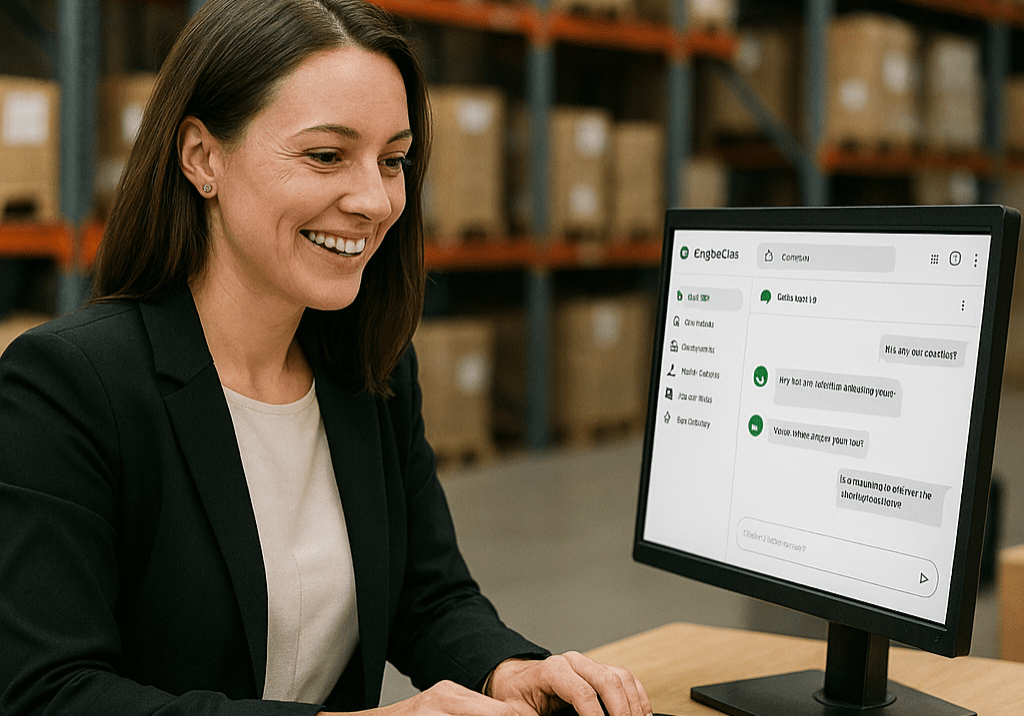
The data on AI chat is difficult to ignore. Shoppers who engage with AI-assisted guidance convert at 12.3%, compared to 3.1% for those who go it alone. That is a four-times lift, and it makes intuitive sense. A customer who cannot find their size, does not understand the returns policy, or wants a gift recommendation will simply leave if nobody answers.
The catch is that not all chatbots are equal. A bad bot is like a hungover sales assistant leaning against a counter and grunting. A good one, powered by modern large language models, can upsell without being obnoxious, answer sizing questions using real product data, and process a return without making the customer want to throw their phone into the sea. Look at Tidio, Zendesk AI, or Intercom Fin as starting points. Deploy one that learns from your actual customer queries rather than reciting a script written in 2019.
2. AI-Powered On-Site Search (Stop Hiding Your Best Sellers)
On-site search powered by AI can increase conversion rates by approximately 216%. The reason is embarrassingly simple: most site search is broken. A customer types "vegan protein powder" and gets shown whey isolate because the search engine is essentially a drunk librarian handing out potatoes instead of books.

AI search learns from behaviour. It understands that people who searched for "vegan protein" also bought specific products. It handles typos, interprets intent, and surfaces seasonal inventory without being told. If you do one thing from this list in the next month, fix your site search. Tools like Algolia, Searchspring, and Klevu are the standard bearers here.
3. Personalisation Engines (The Creepy, But Effective, Kind)
Personalisation has moved beyond "people who bought this also bought that." Modern AI engines build dynamic homepage blocks, tailor email recommendations, and adjust checkout upsells based on browsing history, location, weather patterns, and purchase cadence. It is mildly unsettling how accurate it can be.
The 3PL angle matters here more than most realise. Personalisation works best when stock data is real-time. If your AI recommends a winter coat that sold out three hours ago, you have just wasted a conversion and annoyed a customer. CBF Fulfilment’s integration ensures your inventory feeds are live, so your personalisation engine never recommends a ghost. Tools to explore include Nosto, Dynamic Yield, and Rebuy.
4. Cart Abandonment AI (The Gentle Stalker)
Seventy percent of carts are abandoned. AI does not simply fire a generic "You forgot something!" email an hour later. It analyses why the abandonment happened. Was it shipping cost? Indecision? A sudden attack of financial prudence? The AI then sends the right nudge: a small discount, a low-stock warning, a social proof message, or occasionally a well-timed funny gif.
Klaviyo with its AI-driven flows is the market leader for a reason. Omnisend and Rejoiner are solid alternatives. The key is letting the machine decide the timing and the message rather than setting a single rule and forgetting about it.
5. Dynamic Pricing and A/B Testing (The Machine That Learns What You Are Too Scared to Test)
Teemill, the UK-based print-on-demand platform, discovered something counter-intuitive through AI-driven testing. Increasing postage prices to around £5 actually boosted conversion rates. Customers distrusted shipping that was too cheap, suspecting hidden costs or poor service. Free shipping outperformed "buy one get one free" offers by almost a factor of two. These are not insights a human marketer would confidently pitch in a boardroom.
AI runs thousands of A/B tests on pricing, button colours, checkout language, and shipping thresholds while you sleep. It finds the weird wins. Optimizely, VWO, and Convert are the tools to investigate now that Google Optimize has shuffled off this mortal coil.
The 3PL Connection: Why Your Fulfilment Partner is Your Secret AI Weapon
AI can drive a 12% conversion rate, but if your warehouse cannot pick, pack, and ship at that speed, you are manufacturing disappointment at scale. The AI strategy and the 3PL execution must be married, or the whole thing collapses.
Real-time inventory synchronisation is the non-negotiable foundation. AI personalisation is actively harmful if it recommends out-of-stock items. A 3PL like CBF Fulfilment that offers API-level inventory sync keeps your AI honest and your customers unbothered by "sorry, that item is unavailable" messages.
Seasonal campaigns amplify this dependency. AI can predict a Black Friday spike with eerie accuracy, but only a 3PL with scalable capacity can absorb the volume without breaking. The ROI equation is simple: AI increases conversion rate, which generates more orders, which the 3PL handles smoothly, which creates repeat customers. Break any link in that chain, and the whole investment unravels.
Seasonal AI Campaigns: How to Not Panic in Q4 2026
Most stores run the same Christmas campaign every year and hope for a different result. AI lets you run adaptive campaigns that shift based on real-time data rather than a marketing calendar printed in August.
Picture mid-December. AI detects that "last-minute gifts" searches are spiking on the 18th. It automatically adjusts homepage banners, triggers a "Guaranteed Delivery by 23rd" badge on eligible products, and pauses ad spend on items that can no longer ship in time. Your campaign talks to your fulfilment system. If a product hits low stock, the AI stops promoting it and pushes a substitute without human intervention.
The Boxing Day trap deserves attention too. AI can predict returns volume based on product type and purchase patterns. Prepare your warehouse and your customer service chatbot for the January returns avalanche before it buries your team. A good 3PL partner will have already planned for this. A great one will have the data to make the prediction accurate.
Your 12-Month AI Battle Plan (2026)
This is not a theoretical framework. It is a month-by-month roadmap you can follow without hiring a consultancy or selling a kidney.
Months 1 to 3: The Audit and Quick Wins
Fix site search first. It offers the highest ROI for the lowest effort. Install an AI search tool and watch your conversion rate respond within weeks. Implement a basic chatbot to handle FAQs. Do not try to be clever yet. Just stop losing sales to questions like "What is your returns policy?" and "Do you ship to Northern Ireland?" Set up cart abandonment flows with AI timing. Move beyond the single "send after one hour" rule and let the machine learn when your customers are most likely to return.
Months 4 to 6: Personalisation and Testing
Launch product recommendations on product pages and at checkout. Start A/B testing with AI. Let the machine find the weird wins, like Teemill's postage price discovery. Integrate your 3PL's inventory feed with your personalisation engine. No more recommending out-of-stock items. This is also the moment to audit your fulfilment partner's performance under increased order volume. If they struggle now, they will crumble in November.
Months 7 to 9: Seasonal Prep and Automation
Build your Q4 AI campaigns. This includes dynamic pricing rules, urgency badges, and chatbot scripts trained to answer "Will it arrive by Christmas?" with actual delivery cut-off dates pulled from your 3PL's data. Test your fulfilment partner's capacity with a flash sale. If they buckle, find a new partner before the Black Friday tsunami hits. The cost of switching in October is far lower than the cost of failing in December.
Months 10 to 12: Scale and Optimise
Move toward what some are calling Agentic Commerce. Let the AI manage ad spend adjustments, inventory reordering alerts, and customer segmentation with increasing autonomy. Review the full year's data. What worked? What did not? Did the AI chatbot actually increase average order value, or did it just answer questions politely? Plan for 2027 knowing that the AI landscape moves fast. The tool you swear by today might be obsolete in twelve months. Stay flexible, stay curious, and stay integrated with a fulfilment partner who can keep pace.
The Ethical Bit: GDPR, Data Privacy, and Not Creeping Out Your Customers
AI personalisation works because it knows a disturbing amount about your customers. In the UK, GDPR is not optional window dressing. It is the law, and the Information Commissioner's Office has teeth.
The rule is straightforward. Be transparent. Telling customers "We use AI to recommend products we think you will love" is fine. Telling them "We use AI to track your mouse movements, estimate your salary, and predict your next life crisis" is not. Use first-party data such as purchase history and on-site behaviour rather than third-party cookies. It is more accurate, more durable, and far less legally risky.
Your customers do not mind being served relevant recommendations by an algorithm if it saves them twenty quid on a coat they actually wanted. They just do not want to feel stalked. There is a fine line between helpful and haunting. Stay on the right side of it.
Ready to Stop Losing 98% of Your Visitors?
The data is clear. AI ecommerce store conversions are not a futuristic gimmick or a line item for next year's budget. They are the difference between 1.9% and 12.3%. Between museum and marketplace. Between hoping and knowing.
But a high conversion rate is useless if your fulfilment breaks under the weight of success. CBF Fulfilment handles the logistics so your AI can focus on selling. Real-time inventory sync, scalable pick-and-pack capacity, and a team that does not panic when your Black Friday campaign outperforms expectations.
Your AI can drive the traffic. Your chatbot can close the sale. We will make sure the parcel actually arrives. Deal?

Looking for a Reliable Fulfilment Partner?
Whether you're sending 1,000 items or managing ongoing fulfilment requirements, we're here to help.